
My Graduate Thesis

Updated: Aug 8, 2025
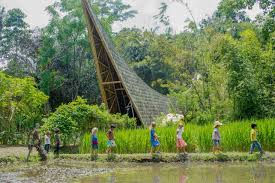
‘The Green School Effect’ on Students with Specific Learning Differences: A Case Study Inquiring Into the Cognitive, Emotional, and Behavioural Benefits of Outdoor Classrooms
Jennipher Spector
A thesis submitted to the London Metropolitan University in partial fulfilment of the requirement for the degree of Master of Arts in Specific Learning Differences August 2012
Acknowledgements In July 2010, while visiting Green School for the first time, I had the good luck of being present for a conversation between Ronald Stones, former Director of Green School and Chris Thompson, current Director of Green School, the content of which inspired this project. Andrew Slavin, former Student Support Specialist at Green School, reviewed my research proposal and helped shape the design of the study. He was extremely helpful in setting up interviews and paving the way for my week of field work, including transportation and lodging logistics. Each of the interviewees – parents, teachers, and students at Green School – generously offered their time and insights. I am thankful to have had the opportunity to speak with each of them and to observe classes during my week of fieldwork. I would like to thank my advisor, Kevin Smith, for his encouragement and support from the design phase of this project through the final draft. Angela Fawcett helped tremendously with her concise editorial comments for each chapter. Also, the administration at the Dyslexia Association of Singapore patiently assisted with logistics throughout. Susan Gottfried, Executive Director of Evergreen Community Charter School in Asheville, North Carolina, U.S., read and offered helpful feedback on my proposal. Susan Nodurft, retired lifelong teacher and my personal mentor, offered encouragement throughout. Marian Hazzard, who wrote a report on ‘The Green School Effect’ for Powers of Place Initiative in 2011, shared her research with me and offered feedback on my own. Finally, I would like to thank my family for their patience. My husband, David, read drafts of everything and encouraged me along the way. My son, Clay, was my inspiration for pursuing study in the field of specific learning differences. 3 Abstract Green School, an international school in Bali, Indonesia, is composed of wall‐less classrooms built from bamboo that allow students to be immersed in the natural environment throughout the school day. This unique school design provided an ideal setting for inquiring into the cognitive, emotional, and behavioural effects of learning in outdoor classrooms on students with specific learning differences (SpLDs) such as attention deficit/hyperactivity disorder (ADHD), dyslexia, and sensory integration disorder (SID). In this primarily qualitative case study, twenty‐one students, parents, and teachers were interviewed and observations were recorded during a one‐week period in May 2011. Myself as a Learner Scale (MALS) questionnaires were administered to interviewed students and results compared to standardized scores. Through triangulation of coded interview data, observations, and MALS results, it was determined that students with SpLDs at Green School experience lower levels of stress, greater resilience/less distractibility, higher levels of confidence/self‐esteem, greater motivation to learn, and better behaviour than students with SpLDs in conventional school settings. Although it was not possible to isolate immersion in nature as the primary factor contributing to the cognitive, emotional, and behavioural benefits to students with SpLDs at Green School, results of this study suggest that students with SpLDs may benefit from increased exposure to natural environments during the school day. Further research both at Green School and in other schools with outdoor classrooms is warranted to better understand the cognitive, emotional, and behavioural benefits of outdoor classrooms. 4 Table of Contents Introduction .......................................................................................................................... 5 Literature Review................................................................................................................ 12 Methodology....................................................................................................................... 25 Data Analysis / Discussion.................................................................................................. 40 Conclusions ......................................................................................................................... 78 References........................................................................................................................... 87 Appendices.......................................................................................................................... 95 5 Introduction Overview This research seeks to determine whether and understand how ‘The Green School Effect’ benefits students with specific learning differences (SpLDs). Green School is composed of wall‐less bamboo classrooms set within the tropical environment of Bali, Indonesia. While the bamboo structures provide shelter from sun and rain, there is otherwise no separation between students and the surrounding environment. The term ‘The Green School Effect’ is derived from a study by Hazzard and Hazzard (2011) in which the Consulting Director of Green School describes: The effect of being at one with nature; of being surrounded by natural green vegetation all day; of breathing clean air; of eating healthy organic food without additives; of being in stunning architectural structures made of natural materials... The impact that all that has on the way students learn, the relationships they enjoy, and their behaviour (p. 63). The purpose of this research is to add to our knowledge about the environmental effects on children with SpLDs. While research on SpLDs in general is extensive, studies evaluating the environmental effects on academic learning within a more ‘natural’ environment are limited due in part to the lack of such schools. This project was conceived during a visit to Green School in July 2010 when the Director shared anecdotal observations that children with histories of educational challenges such as attention deficit/hyperactivity disorder (ADHD) and dyslexia seemed to improve in the natural classroom setting of Green School. This study is an investigation into the potential for outdoor classroom settings to influence the educational experiences of students with SpLDs. This research is a qualitative case study incorporating observations, interviews, and questionnaires conducted during a one‐week timeframe at Green School in May 2011. It 6 also draws from previous research at Green School, as well as documentation from online and print sources. Green School offers a unique setting for a wide range of research within the field of education. This project serves as a descriptive analysis that has the potential to spark interest in other facets of inquiry at Green School, including possible longitudinal quantitative studies into the academic performance of students with SpLDs. Background and Context Opened in 2008, Green School is a mainstream international school (currently preschool through grade 11) envisioned by its founders as a model of sustainability within education. It was built using local, renewable materials (primarily bamboo) and incorporating an open‐air design so that students are immersed in the surrounding tropical environment. The mission of Green School goes beyond its physical environment, however. Its founders built this school with the goal of inspiring students to ‘take responsibility for the sustainability of the world’ (Green School, Welcome to the World’s Green School, n.d.). In addition to using sustainable, local building materials, the school uses renewable energy and produces food on the property. While the core subjects are taught at all levels, there is a particular emphasis on hands‐on, experiential learning through ‘Green Studies’ and Creative Arts. The teachers, students, and administrators come from all around the world as well as from Bali, with up to 20% local students attending through local scholarships. There is a shared interest among all involved in living sustainably and promoting environmental stewardship through education. Green School differs from conventional schools in a number of ways, including physical design, geographical location, student makeup, teaching styles, curriculum, mission, and values. If indeed this type of classroom environment appears to improve learning for students who struggle in a conventional school environment, it would be difficult to pinpoint a single factor in a ‘cause and effect’ analysis. Nevertheless, this study attempts to examine the particular effects that exposure to the natural elements throughout the school day has on academic learning within the complex and dynamic system of Green School. 7 Grade 5 Classroom, Green School Photo Credit: Jennipher Spector, July 2010 Problem Statement As claimed on the Green School website, learning in classrooms without walls ...helps those youngsters who are easily distracted in conventional classrooms to focus much more easily on their tasks – there are plenty of distractions at Green School but they are natural distractions which are acceptable to, and not in conflict with concentration (Green School, Learning to Live in the Real World, n.d.). This research examines the conjecture that learning in an environment which incorporates the sights, sounds, and smells of the natural world is beneficial to students who are distracted or otherwise disengaged in a conventional classroom. 8 Research Questions Do students with SpLDs experience improved academic performance in the Green School environment? Do students with SpLDs experience improved academic self‐esteem in the Green School environment? Do students with SpLDs experience improved behaviour in the Green School environment? Does a student’s response to the Green School environment vary depending upon the type of SpLD present? Can effects of the natural environment be separated from effects of other aspects of Green School that differ from conventional schools? What are possible explanations for physiological effects in the Green School environment on students with SpLDs? What are other possible explanations for perceived benefits of Green School for students with SpLDs not related to physical environment? Can the benefits of the Green School environment be transferred to conventional school environments? Research Approach This project fits the design structure of an embedded single‐case study in that each data source was analyzed independently, as well as in relationship to each other and within the larger context of the case study paradigm. Inclusion of multiple data sources offered the advantage of improved internal validity through increased points of triangulation, which increases ‘correspondence between research and the real world’ (Wolcott, 1994 in Merriam, 2009). In this study, the design structure can be illustrated as such, wherein various data sources are embedded into the overall case study: Case Study: Green School o Classroom Observations o Teacher Interviews o Parent Interviews 9 o Student Interviews o Myself as a Learner Scale (MALS) o Documents The research approach was also based upon the concept of grounded theory, which is founded upon an engagement with the data throughout the data generation process in order to allow for unexpected theories to emerge, that in turn guide data generation within a ‘context of discovery’ (Bryant, 2007). The method of data analysis for interviews relied upon coding strategies developed by Ruona (2005). Once the coding process was completed, the data were interpreted to generate theories that attempt to answer the research questions. The overall approach in this qualitative research is inductive and comparative (Merriam, 2009), which is to say that interpretation is derived from data and that various data are compared to each other. In this way, data were triangulated to increase validity and credibility. Assumptions Many critics have argued that qualitative research cannot be valid and reliable to the extent that quantitative studies are. Because of the contextualized nature of qualitative inquiry, there are simply too many variables and too much room for interpretation for qualitative studies to be ‘objective.’ Nevertheless, the credibility of a qualitative study can be greatly enhanced by following rigorous and systematic research design, execution, analysis, interpretation, and presentation (Merriam, 2009). Pivotal to this methodology, however, is objectivity of the researcher. While complete objectivity is probably not possible in qualitative research, it is important for the researcher to recognize personal biases and to minimize effects on the study through both acknowledgement and restraint. The researcher must therefore acknowledge that personal experiences have led to an interest in the question under study while simultaneously remaining on guard against these experiences colouring interpretation of the data. 10 Underlying the researcher’s motivations for conducting this study is an assumption that conventional school environments are often ill‐suited to students with SpLDs. This is based upon the researcher’s observations of conventional classrooms in the United States and international schools in Singapore, which can be stressful environments for students with SpLDs since they highlight these students’ shortcomings by focusing on academic achievement. Although the researcher does not expect that a more ‘natural’ school environment can permanently alter neurologically‐ and genetically‐based differences of students with SpLDs, she is intrigued by the notion that a change in environment may have physiological effects on these students that enables them to better cope with academic stress. The terms ‘nature’ and ‘natural’ are problematic words within the context of contemporary culture. There is often a cultural assumption that things perceived as ‘natural’ are superior to products of culture. This view assumes that humans are somehow outside the realm of ‘nature,’ although humans are subject to the same laws and processes as any other living thing. It is furthermore difficult to untangle ‘nature’ from ‘culture,’ as humans have impacted the planet so extensively. For the purpose of this paper, the terms ‘nature’ and ‘natural’ will be used, since they are part of contemporary lexicon, despite the cultural baggage associated with them. For example, the environment of Green School may be referred to as ‘natural’ although it is acknowledged that the environment has been significantly manipulated by humans. Nevertheless, in comparison to a conventional school, it is assumed that the environment of Green School is relatively ‘natural’ due to the minimalist design that allows direct exposure to the surrounding tropical elements. The Researcher Past experiences related to this research include completion of a Bachelor of Science in Directed Interdisciplinary Studies from Montana State University in Nature/Culture studies, for which qualitative research, including interviews, was conducted to determine how sense of place was affected in a rural community disenfranchised by the logging industry. 11 At the time that fieldwork commenced, the researcher had completed coursework toward completion of a Masters of Arts in Specific Learning Differences from London Metropolitan University via the Dyslexia Association of Singapore. She was teaching in a special needs classroom, as well as working as an educational therapist for international students with SpLDs in Singapore. At the time of writing of the dissertation, the researcher had returned to her home in Asheville, North Carolina, U.S., where she was teaching at a public charter school that follows Experiential Learning School principles. Rationale and Significance The rationale for this study relates to a perceived need for alternative school environments for students with SpLDs, as well as for ways to improve the learning environments of conventional schools for students with SpLDs. This study is significant in that it is the first research into the effects of the Green School environment on students with SpLDs. 12 Literature Review Overview This chapter will begin with an overview of literature related to learning in outdoor environments and will continue with a review of the literature encompassing various theories relevant to the question of how an outdoor learning environment may benefit students with SpLDs. Since the term ‘specific learning differences’ is highly generalized to apply to any discrepancy between overall cognitive ability and specific areas of relative weakness, this chapter will look at those SpLDs that, according to information from the Student Support Specialist at Green School, are most relevant to the student population at Green School, namely: ADHD, dyslexia, and sensory integration disorder (SID). Outdoor Learning There is growing concern among parents and educators that sterile learning environments are detrimental to children’s ability to learn. In his 2005 book Last Child in the Woods, Richard Louv coined the term ‘Nature Deficit Disorder,’ which he claims is responsible for a wide range of behaviour problems, including ADHD. In response to his compelling argument that school children should be spending more time outside for the purpose of improving physical, emotional, social, and cognitive wellbeing, the No Child Left Inside Coalition (a pun on U.S. President Bush‐era No Child Left Behind legislation), the Children and Nature Network, the Coalition for Education in the Outdoors, and other grassroots organizations have begun to spring up in the U.S. and elsewhere to promote outdoor education. Although the U.S. has yet to implement legislation promoting outdoor education (such as the proposed No Child Left Inside Act), in 2012 the U.S. Department of Education initiated ‘Green Ribbon Schools’ awards in recognition of schools that are ‘taking outstanding steps to educate tomorrow's environmental leaders, and demonstrating how sustainability and environmental awareness make sense for the health of our students and our country’ (U.S. Department of Education, 2012). Likewise in the U.K., concern over the diminishing outdoor learning opportunities for students has led to a call for ‘schools to make better use of the outdoor classroom as a context for teaching and learning’ (report for the Department of Education and Skills by 13 Scott, Reid, & Jones, 2003). The National Foundation for Educational Research was subsequently commissioned to review the research on outdoor learning (see Rickinson et al., 2004). In 2006, the Council for Learning Outside the Classroom published its ‘Manifesto’ launched by then Secretary of State in which it states that ‘We believe that every young person should experience the world beyond the classroom as an essential part of learning and development, whatever their age, ability, or circumstances’ (p. 2). An evaluation of the effectiveness of outdoor learning experiences in the U.K. (Ofsted, 2008) found that ‘hands‐on activities led to improved outcomes for pupils and students, including better achievement, standards, motivation, personal development and behaviour’ as well as ‘examples of the positive effects of learning outside the classroom on young people who were hard to motivate.’ A recent report by the National Trust (Moss, 2012) concluded that ‘children who learn outdoors know more, understand more, feel better, behave better, work more cooperatively and are physically healthier’ (p. 9). Originating in Scandanavia in the 1950’s, Forest Schools have become increasingly popular in the U.K. (Maynard, 2007). Described by the Forest School England network as ‘an inspirational process that offers children, young people and adults regular opportunities to achieve, and develop confidence through hands‐on learning in a woodlands environment’ (p. 5), case studies indicate that participation in Forest Schools positively impacts students’ self‐esteem (O’Brien & Murray, 2006). A pilot study by Ridgers and Sayers (2010) further points to students at Forest Schools being more confident, having better social skills, and engaging in more physical activity following Forest School sessions. School‐based initiatives around the world that incorporate environmentally‐focused learning, adventure, and play in an outdoor environment include environmental education, sustainability education, place‐based education, school gardens, outdoor classrooms, experiential learning, and wilderness experiences. Numerous studies offer insight into the multiple benefits of learning and playing in the natural world on children’s physical, emotional, social, and cognitive health. In an executive summary based on decades of research across multiple disciplines, Kuo (2010) concludes that: 14 In greener settings...we find that people are more generous and more desirous of connections with others; we find stronger neighborhood social ties and greater sense of community, more mutual trust and willingness to help others; and we find evidence of healthier social functioning in neighborhood common spaces—more (positive) social interaction in those spaces, greater shared use of spaces by adults and children. In less green environments, we find higher rates of aggression, violence, violent crime, and property crime— even after controlling for income and other differences...Access to nature...impacts psychological, as well as social functioning. Greater access to green views and green environments yields better cognitive functioning; more proactive, more effective patterns of life functioning; more self‐discipline and more impulse control; greater mental health overall; and greater resilience in response to stressful life events. Less access to nature is linked to exacerbated attention deficit/hyperactivity disorder symptoms, more sadness and higher rates of clinical depression. People with less access to nature are more prone to stress and anxiety, as reflected not only individuals’ self‐report but also measures of pulse rate, blood pressure, and stress‐related patterns of nervous system and endocrine system anxiety, as well as physician‐diagnosed anxiety disorders... Greener environments enhance recovery from surgery, enable and support higher levels of physical activity, improve immune system functioning, help diabetics achieve healthier blood glucose levels, and improve functional health status and independent living skills among older adults. By contrast, environments with less green are associated with greater rates of childhood obesity; higher rates of 15 out of 24 categories of physician‐ diagnosed diseases, including cardiovascular diseases; and higher rates of mortality in younger and older adults. (p. 4). A Dutch study examining the medical records of more than 345,000 people found that of the 24 disease clusters examined, 15 were significantly less frequent in greener environments, and none were more frequent (Maas et al., 2009 in Kuo, 2010). A meta‐ 15 analysis in the U.K. found that exercise in nature improved mental health through boosting both self‐esteem and mood (Barton & Pretty, 2010). While one explanation for the health benefits of green environments is related to increased physical activity, exercise is not the only explanation. A Japanese study looked at the effects of ‘forest bathing’ – simply experiencing a forest environment – on blood glucose in diabetic patients and found that blood glucose decreased significantly more after a walk in a forested area than in a non‐forested area (Ohtsuka, Yabunaka, & Takayama, 1998 in Kuo, 2010). Another Japanese study found that ‘forest bathing’ improved immune system function and decreased stress, whereas visits to urban areas had no positive effects (Li, 2010 in Kuo, 2010). ADHD and Attention Restoration Theory ADHD affects approximately 5% of the global population (Polanczyk, de Lima, Horta, Biederman, & Rohde, 2007). Although ADHD can have a broad range of effects on the individual, the DSM‐IV (American Psychiatric Association, 2000) names only inattention (in ADD) and impulsivity/hyperactivity (in ADHD) as criteria for diagnosis (see appendix A for complete DSM‐IV clinical diagnostic criteria). Also, it is expected that many students with ADHD symptoms will have overlapping co‐morbidities, such as dyslexia, SID, and other SpLDs (approximately 70%, according to Mayes, Calhoun, & Crowell, 2000). Although current recommendations for classroom environment (Barkley, 2006; Carbone, 2001) are based on early research indicating that children with ADHD learn better in a quiet, highly structured environment with as few distractions as possible (Greenewald & Walsh, 1996; Harrell, 1996; Weinstein, 1976; Whalen, Henker, Collins, Finck, & Dotemoto, 1979), new evidence suggests that exposure to green outdoor environments reduces symptoms of ADHD (Kuo & Taylor, 2004; Taylor & Kuo, 2011 and 2006; Taylor, Kuo, & Sullivan, 2001). The detrimental effects of stress on memory is well‐documented (Abercrombie, Kalin, Thurow, Rosenkranz, & Davidson, 2003; Elzinga, Bakker, & Bremner, 2005; Newcomer et al., 1999). Studies on the environmental effects on children with ADHD are founded upon research begun on adults in 1979 and continuing into the present collectively finding that 16 exposure to natural settings reduces stress and negative emotion in adults (Hartig, Mang, & Evans, 2003; Herzog & Strevey, 2008; Ulrich, 1979; van den Berg, Hartig, & Staats, 2007). Building upon these findings, psychologists Kaplan and Kaplan developed Attention Restoration Theory (ART), which is based on the idea that natural environments enhance mental functioning. Wells and Evans (2003) explain this phenomenon as such: ...exposure to nature bolsters one’s cognitive resources by allowing neural inhibitory mechanisms to rest and recover from use...A person whose attention resources have been restored will be able to inhibit the urge to respond to potentially distracting stimuli, able to focus attention, and able to more effectively manage the challenges of daily life (p. 325). While the cognitive underpinnings of ART are unclear, its effects have been validated numerous times. In 1991, Hartig, Mang, and Evans found in a controlled study that university students engaged in a nature walk (versus an urban walk or relaxation) before performing cognitive tasks had better attentional performance. The authors attributed the results to the ability of natural environment to facilitate recovery from mental fatigue. Similarly, in studying inner‐city residents, Kuo (2001) found that attentional performance is systematically higher in individuals living in greener surroundings. A 1995 study by Tennessen and Cimprich showed that university dormitory residents with more natural views from their windows scored significantly better than those with less natural views on tests of directed attention. Likewise, in research by Berto (2005), participants exposed to photographs of natural environments (as opposed to built environments or geometrical patterns) improved their performance on attention tests. Berman and Kaplan (2008) conducted two experiments showing, respectively, that walking in nature and viewing pictures of nature can improve directed attention. These studies indicate that even viewing natural environments has a restorative effect on attentional performance. However, Fuller and colleagues (Fuller, Irvine, Devine‐Wright, Warren, & Gaston, 2007) determined that the psychological benefits of immersion in a natural environment increased with levels of species richness so that increased biodiversity or biological complexity resulted in increased levels of cognitive restoration. 17 Additional evidence includes a 2006 study by Gulwadi on how teachers prefer to lower vocational stress found that proximity to or immersion in natural environments was an effective strategy for dealing with the stresses of the teaching profession. Mayer and colleagues (Mayer, Frantz, Bruehlman‐Senecal, & Dolliver, 2009) found that exposure to nature resulted in increased connectedness to nature, attentional capacity, positive emotions, and ability to reflect on a life problem. Conversely, a 2011 study in Germany (Lederbogen, et al.) used fMRI to show that urban residents handled stress differently than rural residents, and that an urban upbringing negatively impacted neuronal connectivity in areas of the brain related to memory and stress processing. Kaplan and Berman (2010) offer a cognitive explanation of ART via its relationships to executive functioning and self regulation, the mechanisms involved in decision‐making and impulse control, respectively: Research on executive functioning and on self‐regulation have each identified a critical resource that is central to that domain and is susceptible to depletion. In addition, studies have shown that self‐ regulation tasks and executive‐functioning tasks interact with each other, suggesting that they may share resources. Other research has focused specifically on restoring what we propose is the shared resource between self‐regulation and executive functioning. Utilizing a theory‐ based natural environment intervention, these studies have found improvements in executive‐functioning performance and self‐regulation effectiveness, suggesting that the natural environment intervention restores this shared resource (p. 1207). While the majority of ART research has been directed toward adults, a number of studies in the past decade indicate an improvement in children’s cognitive performance as a function of exposure to nature. In 2000, Wells found that following relocation, children whose homes improved the most in terms of greenness also tended to have the highest levels of cognitive functioning following the move. A 2002 study by Taylor, Kuo, and Sullivan found that for inner‐city girls, green space immediately outside the home ‘helped them lead more effective, self‐disciplined lives’ (p. 1). Wells and Evans (2003) also found 18 that for children living in a rural setting, levels of nearby nature moderate the psychological impacts of stressful life events. A 2008 study by Matsuoka found that high schools with greater quantities of natural features near classroom and cafeteria windows were related to higher standardized test scores, graduation rates, and percentages of students planning to attend college. Also, schools that allowed students to eat lunch outdoors were associated with enhanced test scores and college plans. A 2000 study looked at California schools utilizing Environment as an Integrated Concept for Learning (EIC), designated as ‘using a school’s surroundings and community as a framework within which students can construct their own learning, guided by teachers and administrators using proven educational practices’ (Lieberman, 2000, p. 5). Results of this study indicated ‘better performance on standardized measures of academic achievement in reading, writing, math, science, and social studies; reduced discipline and classroom management problems; increased engagement and enthusiasm for learning; and greater pride and ownership in accomplishments’ (Lieberman, 2000, p. 5). In 2001, Taylor, Kuo, and Sullivan presented the first evidence that ART applies to both adults with normal attentional functioning and children with ADHD. Results of their study indicate that ‘children function better than usual after activities in green settings and that the ‘greener’ a child’s play area, the less severe his or her attention deficit symptoms’ (p. 1). Additional research by Kuo and Taylor in 2004 found that green outdoor activities reduced ADHD symptoms significantly more than did activities conducted in other settings, based on parent reports. A 2011 study in the Netherlands found that children with ADHD performed better on a concentration test in a rural rather than an urban environment (van dan Berg & van dan Berg, 2011). Furthermore, a 2009 study by Taylor and Kuo showed that children with ADHD performed better on Digit Span Backwards (a common measurement of working memory) after a 20‐ minute walk in a park than in either of two urban environments. The difference between the two groups was substantial – equivalent both to the difference between ADHD and non‐ADHD children, as well as to the difference between ADHD children experiencing the peak effects of extended‐release methylphenidate and non‐medicated ADHD children. Another study in 2011 by Taylor and Kuo found that ‘children with ADHD who play 19 regularly in green play settings have milder symptoms than children who play in built outdoor and indoor settings’ (p. 1). Kuo and Taylor (2004) propose an explanation for how ART might be related to potential improvement in ADHD for children: In non‐ADHD populations, the right prefrontal cortex has been implicated in both the capacity to deliberately direct attention and the presence of attention fatigue. A number of studies have produced evidence of a right frontal–cortical locus of attention control (Coull et al., 1998; Marshall et al., 1995) and another has shown that the right prefrontal cortex is subject to fatigue after sustained demands on directed attention (Glosser & Goodlass, 1990). Correspondingly, the right prefrontal cortex has been implicated in ADHD. The right prefrontal cortex has been found to be smaller and less active among children with ADHD than among same‐aged peers (Casey et al., 1997; Filipek et al., 1997; Heilman et al., 1991; Hynd et al., 1990) and severity of ADHD symptoms has been shown to be proportional to degree of asymmetry between left and right prefrontal cortex regional cerebral blood flow (Langleben, 2001). Thus, it may be that attention fatigue and ADHD represent different problems in the same underlying mechanism (p. 1581). Dyslexia / Literacy‐Based Disorders Worldwide prevalence of dyslexia is not well documented, as there is variance in how it is defined and diagnosed. However, statistics range from 4 to 20% (International Dyslexia Association, 2008; National Institute of Child Health and Human Development, 2010; Shaywitz, 2003). The International Dyslexia Association (2002) defines dyslexia as such: Dyslexia is a specific learning disability that is neurological in origin. It is characterized by difficulties with accurate and/or fluent word recognition and by poor spelling and decoding abilities. These difficulties typically result from a deficit in the phonological component of language that is 20 often unexpected in relation to other cognitive abilities and the provision of effective classroom instruction. Secondary consequences may include problems in reading comprehension and reduced reading experience that can impede the growth of vocabulary and background knowledge. The author was unable to find studies exploring the effects of nature on dyslexia and literacy‐related SpLDs. However, a review of literature examining dyslexia’s psychological effects and factors related to dyslexic students’ motivation may prove useful when applied to conditions at Green School. Multisensory, structured language approaches to teaching have been found to be highly effective in improving dyslexic students’ literacy skills. Nonetheless, dyslexia is persistent throughout the lifespan, and the negative psychological effects of dyslexia and related SpLDs are well‐documented. A 2006 study by Lackaye and Margalit, for example, showed that students with SpLDs experienced ‘lower levels of achievement, effort investment, academic self‐efficacy, sense of coherence, positive mood, and hope, and higher levels of loneliness and negative mood’ (p. 1) in comparison to students without SpLDs. Nicolson and Fawcett (2008) cite Holt’s studies of failure (1984), in which it was observed that following repeated failures, students either adopt a passive learning strategy or a coping strategy that downplays learning, a vicious cycle that results in more academic failure. Lack of motivation for students with SpLDs is such a serious problem that a 2006 study by Sideridis found that the level of motivation (as shown through self‐efficacy, motivational force, task avoidance, goal commitment, or self‐concept) was highly accurate in classifying students with or at risk for SpLDs. As explained by Witzel and Mercer (2003) studies by Dweck and Elliott (1983) and Settle and Milich (1999) indicate that the repeated failures and low achievement associated with SpLDs often lead to learned helplessness, in which students attribute failures to internal causes and successes to external causes. Further studies by Grolnick and Ryan (1990) indicate that children with SpLDs were also likely to perceive academic outcomes as controlled by powerful others, such as teachers, which places the locus of control in external forces. Witzel and Mercer (2003) further cite work by Deci and Ryan (1992) in 21 concluding that students with SpLDs have indicated that their feelings of competence tie directly into their self‐esteem. Dev (1997) summarizes others’ studies (Adelman, 1978; Adelman & Taylor, 1986; Brophy, 1983; Mastropieri & Scruggs, 1994; Smith, 1994) in concluding that a student who has a fear of failure or low self‐esteem is less likely to develop positive motivation to learn. Generally speaking, there are two categories of motivation: intrinsic and extrinsic. Intrinsic motivation occurs when the student develops internally satisfying consequences during or after the behaviour. Some examples of intrinsic rewards are task completion, feedback or result, acquisition of knowledge or skills, and a sense of mastery. Extrinsic motivation takes place when the individual performs a task for the purpose of achieving satisfying consequences outside of the person during or after the behaviour. Some examples of extrinsic rewards are tangible objects, token systems, social approval, and special activities. Determining a student’s source of motivation is typically straightforward, as students do what we they are motivated to do, and thus their behaviour displays their motivation (Sprick, Garrison, & Howard, 1998 in Witzel & Mercer, 2003). Research by Das and colleagues (Das, Schokman‐Gates, & Murphy, 1985) finds that in the early grades, students with reading difficulties are as intrinsically motivated as the ‘normal’ readers; however, even with a moderate amount of reading difficulty, they become extrinsically motivated in later years of elementary school. 2002 studies by Sideridis indicate that at‐risk students exhibit significantly lower perceptions of goal importance, intention to achieve, belief strength, outcome evaluation, and normative beliefs, and eventually scored lower in language and mathematics at the end of the academic year. Further studies by Polychroni and colleagues (Polychroni, Koukoura, & Anagnostou, 2006) showed that dyslexic students displayed lower academic self‐concept than low/average and high performance groups on all domains, except practical ability. Also, dyslexic students perceived reading less as a function of personal development as compared to their peers. Furthermore, the dyslexic group were found to be motivated by external motives, similar to the average/low group, while high achievers were found to have intrinsic motivation. 22 Dev (1997) summarizes the work of others (Adelman, 1978; Adelman & Taylor, 1986; Gottfried, 1983, 1985) in concluding that enhancing the intrinsic motivation of students with learning disabilities can result in improved learning. There is much debate, however, over how to develop intrinsic motivation that is so often lacking in SpLD students. Kohn (1991) argues that rewards only motivate children to get rewards, and that ‘special education teachers are using a system that trains students as if they were pets’ (p. 64) The power of tangible rewards is evident in the dopamine discharge in the brains of primates who predict or expect the delivery of preferred rewards (Tremblay, Hollerman, & Schultz, 2000). Further research (Deci, Hodges, Pierson, & Tomassone, 1999 in Witzel & Mercer, 2003) found that the use of tangible rewards (i.e., tokens or stars) with tasks that the students found interesting had a negative effect on the intrinsic motivation of preschool through college students. In other words, ‘giving tangible rewards based on student performance to students who are already engaged in a task reduces the chance that the student will perform the rewarded task when a tangible reward is not offered’ (p. 90). Since, according to Witzel and Mercer (2003), students with SpLDs require more external control and thus more extrinsic motivation to increase the likelihood of their repeating effective academic behaviour, the effect of rewards significantly depends on how they are delivered by the teacher. They explain that positive reinforcement leads to repeated performances, so that when teachers use a reward, they attempt to reinforce a desired behaviour. Witzel and Mercer (2003) further cite Newby (1991) in his finding that explaining relevance provided a fairly strong relationship to on‐task performance, whereas using tangible rewards had a negative correlation with on‐task performance. Newby also found that a teacher’s use of praise, an extrinsic reward, led to intrinsic motivation. Dev (1997) further summarized the work of others (Boggiano, Main, & Katz, 1988; Skinner, Wellborn, & Connell, 1990) in stating that teachers can enhance the intrinsic motivation of their students by allowing the students to feel that they are in control of their own learning and are encouraged to monitor and reinforce their progress themselves. Furthermore, proximal goal setting has been shown to be self‐motivating because it cultivates a feeling of competency in learners (Brophy, 1983; Fulk & Montgomery‐Grymes, 1994; Pintrich & DeGroot, 1990 in Dev, 1997). 23 Nicolson and Fawcett (2008) make reference to two additional elements that are relevant to improving intrinsic motivation: interest and enjoyment. According to Scully and Roberts (2002), ‘children who experience early literacy instruction through pleasurable activities are more motivated to pursue the challenging tasks associated with learning and are more likely to develop a life‐long love of reading and writing’ (p. 1). Fromberg and Bergen (2006) emphasize the value of play in the curriculum beyond preschool, stating, ‘Characteristics of play in later elementary‐ and early middle‐school age children include intrinsic motivation, spontaneity, self‐imposed goals, and active engagement’ (p. 22). Hidi and colleagues (Hidi, Renninger, & Krapp, 2004) further argue that interest is ‘a locus of integration of psychological and neuro‐scientific functioning [that] might inform and support conditions for learning that would both position and enable younger students to become more focused, motivated, and successful learners’ (p. 107). Sensory Integration Disorder Theory Sensory Integration Disorder (also called Sensory Processing Disorder) is thought to affect approximately 5‐10% of children (Kranowitz, 2005). SID is an impairment in detecting, modulating, interpreting, or responding to sensory stimuli. Recent studies indicate a high rate of comorbidity between ADHD and sensory‐related issues (Mangeot et al., 2001; Miller, Coll, & Schoen, 2007; Yochman, Parush, & Ornoy, 2004). Tallal and colleagues (Tallal, Miller, & Fitch, 1993) further argue that the neurological basis of dyslexia is related to sensory processing, specifically temporal processing of auditory stimuli. Sensory integration can be described as a theory of brain‐behaviour relationships based on the following premises (Glomstad, 2004): 1. Learning is dependent on the ability to take in and process sensation from movement and the environment and use it to plan and organize behaviour 2. Individuals who have a decreased ability to process sensation also may have difficulty producing appropriate actions, which, in turn, may interfere with learning and behaviour. 24 3. Enhanced sensation, as a part of meaningful activity that yields an adaptive interaction, improves the ability to process sensation, thereby enhancing learning and behaviour (p. 4). Sensory integration‐based occupational therapy involves the use of sensory‐rich activities using products designed to engage the senses. The researcher was unable to locate any studies inquiring into the possible benefits of sensory integration‐based occupational therapy in a natural setting, despite the natural world being rich in sensory information. Conclusion While there is significant interest in understanding the cognitive benefits of learning in outdoor environments, aside from the above‐referenced studies related to ADHD, the researcher was unable to find studies specifically related to the possible benefits of learning in outdoor classrooms to students with SpLDs. There is a need for further research on the cognitive effects of learning in outdoor environments for students with SpLDs. Green School therefore offers a unique opportunity for studying this relationship, with this study as a starting point for inquiry into the complex neurological processes that affect academic performance. 25 Methodology Overview The purpose of this research was to determine whether and understand how ‘The Green School Effect’ benefits students with SpLDs. Given the large number of variables under consideration and lack of a control group, this project did not lend itself to a quantitative approach. Rather, qualitative methodologies were employed that focus on ‘meaning in context’ (Merriam, 2009). Stake (1995) describes the distinction between quantitative and qualitative research as such: In quantitative studies, the research question seeks out a relationship between a small number of variables...In qualitative studies, research questions typically orient to cases or phenomena, seeking patterns of unanticipated as well as expected relationships (p. 41). Among the many forms of qualitative research, this project most clearly fits into the category of case study, defined by Merriam as an ‘in‐depth description and analysis of a bounded system.’ Merriam further describes case study as being particular to a unique situation, rich in descriptive language, and heuristic in the reader’s understanding of the phenomenon. This project also matches descriptions of a case study outlined by Yin (2009, p. 2): ‘How’ or ‘why’ questions are being posed The investigator has little control over events The focus is on a contemporary phenomenon within a real‐life context The case study methodology has the additional advantage of allowing the inclusion of multiple units of analysis and permitting a range of techniques by employing the design structure of the single‐case embedded study. The embedded, single case design can include a combination of diverse qualitative and quantitative methods as applied to the various units of analysis. Although the majority of data in this study are qualitative in nature, questionnaires were included that yielded quantitative results, thus making the embedded case study (Yin, 2009) an appropriate description of the project. Also, each data source was analyzed independently, as well as in relationship to each other and 26 within the larger context of the case study paradigm. Inclusion of multiple data sources offers the advantage of improved internal validity through increased points of triangulation, which increases ‘correspondence between research and the real world’ (Wolcott, 1994 in Merriam, 2009). Many critics have argued that qualitative research cannot be valid and reliable to the extent that quantitative studies are. Because of the contextualized nature of qualitative inquiry, there are simply too many variables and too much room for interpretation for qualitative studies to be ‘objective.’ Nevertheless, the credibility of a qualitative study can be greatly enhanced by following rigorous and systematic research design, execution, analysis, interpretation, and presentation (Merriam, 2009). Pivotal to this methodology, however, is objectivity of the researcher. While complete objectivity is probably not possible in qualitative research, it is important for the researcher to recognize personal biases and to minimize effects on the study through both acknowledgement and restraint. The researcher must therefore acknowledge that personal experiences have led to an interest in the question under study while simultaneously remaining on guard against these experiences colouring interpretation of the data. This researcher’s motivations and assumptions were discussed in the introduction, and the influence of the researcher’s unintended biases was minimized in the planning phase by involving others in research design. Although it would have been ideal to have others involved in data collection, the expense and logistics of including others in fieldwork made this strategy impractical. Yin (2009) argues that an effective method of increasing reliability within a case study is to maintain a chain of evidence, described as explicit links among the questions asked, the data collected, and the conclusions drawn. Using this method, an external observer should be able to trace the steps in either direction, from conclusions back to initial research questions or from questions to conclusions, via the data collected. This is similar to the concept of process tracing (Evera, 1997) whereby the investigator explores the chain of events by which initial case conditions are translated into case outcomes. According to Evera, ‘the cause‐effect link that connects independent variable and outcome is unwrapped and divided into smaller steps; then the investigator looks for 27 observable evidence of each step’ (p. 64). In this study, the smaller steps of the cause‐ effect link take place within the individual student on an interrelated cognitive, emotional, and behavioural level. The only part of this process that was possible to observe, however, is behaviour, so this was the focus of the study in terms of data collection and analysis. Data Collection Methodology Mason (2003) argues for the term data generation rather than data collection, due to the fact that in qualitative studies, the researcher is not a ‘neutral collector of information about the social world.’ Rather, the qualitative researcher actively constructs knowledge according to ‘certain principles and using certain methods derived from, or which express, their epistemological position.’ The epistemological position for this study, that an understanding of the relationship between students with SpLDs and the learning environment can be gained through observations and interviews, thus underlies the construction of knowledge based on data generation at Green School. It is important to note, also, that data collection and analysis should be recursive processes. Bogdan and Biklen (2007) recommend conducting simultaneous data collection and analysis in order to ensure critical reflection that can help improve data generation methods. They claim that a recursive approach helps to appropriately narrow or broaden the study, develop analytic questions, and guide the continued direction of fieldwork. This approach is related the concept of grounded theory, which is based on an engagement with the data throughout the data generation process that allows for unexpected theories to emerge, that in turn guide data generation within a ‘context of discovery’ (Bryant & Charmaz, 2007). Grounded theory ‘purists’ (Bryant & Charmaz, 2007) suggest beginning fieldwork before conducting a literature review and without any preconceived notions, but as Bryant and Charmaz suggest, ‘an open mind does not imply an empty head’ (p. 20). It is important, then, to be aware of preconceived ideas based on personal experience and literature review, but to also be open to the possibility of different ideas emerging from the uniqueness of the situation being researched. 28 Merriam (2009) quotes Patton (2002) in saying that qualitative data consist of: ‘direct quotations from people about their experiences, opinions, feelings, and knowledge’ obtained through interviews; ‘detailed descriptions of people’s activities, behaviours, actions’ recorded in observations; and ‘excerpts, quotations, or entire passages’ extracted from various types of documents (p. 85). All three types of qualitative data – interviews, observations, and documents – were collected and analyzed in this study. Below, each will be explained individually. Observations: Classroom observations form the backbone of this case study for the purpose of creating a descriptive analysis of the Green School learning environment. Whereas in ethnographic studies, the researcher is an active participant (Cohen, Manion, & Morrison, 2007), this study most closely follows the approach of ‘non‐participant observation.’ This strategy implies a degree of separation between researcher and subject so as to minimize influence upon the study group. While the researcher was visible to the students (not behind a screen or two‐way mirror, as is the strictest form of non‐participant observation), she made every attempt to be unobtrusive by situating herself to the side of the main classroom area. Rather than use a video camera, which has more potential to affect classroom dynamics, the researcher used a notebook to record observations. Classrooms from preschool to year 5 were observed individually for 1‐2 hours over a 5‐ day period in May, 2011 using an unstructured format but generally following attached Observation Guidelines (see Appendix B). While some students at Green School had been identified as having other SpLDs such as dyslexia and SID, ADHD is the most easily observable SpLD due to its behaviour‐based symptoms of distractibility and impulsivity. Also, there is a high rate of overlapping co‐ morbidity between ADHD and dyslexia, SID, and other SpLDs (approximately 70%, according to Mayes, Calhoun, & Crowell, 2000). There are a number of checklists available for use when screening students for ADHD, such as Vanderbilt Rating Scale; ADHD Rating Scale IV; ADHD Symptom Checklist 4; Disruptive Behavior Disorders Rating 29 Scale; and Swanson, Nolan, and Pelham Rating Scale (Wolraich & DuPaul, 2010). However, the purpose of this study is not to screen students for ADHD or other SpLDs, since those students will have been previously identified. Other classroom behaviour coding systems include the ADHD Behavior Coding System, the Hyperactive Behavior Code, the Classroom Observation Code, the Behavior Observation of Students in Schools, and the ADHD School Observation Code (Mennuti , Freeman, & Christner, 2005). Each of the above‐mentioned screening tools is intended to focus on a single student using interval recording systems, and so its use would distract from the observation of environmental and other classroom factors. Nevertheless, general categories of off‐task behaviour were used as a reference in identification of ADHD‐specific behaviour, such as distracting, inattentive, or impulsive behaviour (see appendix A). Mennuti and colleagues (Mennuti , Freeman, & Christner, 2005) recommend comparing the behaviour of the identified student to one or two classmates who have been identified as ‘average’ by the classroom teacher so that each child is evaluated relative to a classroom‐based standard of behaviour. This tactic was deemed especially useful in the Green School environment, since many of the behaviours categorized as off‐task by screening tools, such as speaking out of turn or fidgeting, may not be deemed inappropriate in a non‐traditional learning environment. Comparing the behaviours of SpLD‐identified students with non‐SpLD students was therefore expected to give a more contextualized understanding of the identified students’ ability to engage in the learning process. In practice, this was carried out by observing each classroom before students with SpLDs were pointed out by the teachers. As a result, it could be noted if particular students stood out as exhibiting behaviour that was different from the classroom norm. In this way, the behaviour of individual students was contextualized within the overall classroom culture rather than particular behaviours being predefined as being atypical. Interviews: Interviews were used both to triangulate data gathered through observations and to inform a richer, deeper, more varied perspective of Green School than could have been obtained through observation alone. As Merriam (2009) explains, ‘interviewing is 30 necessary when we cannot observe behaviour, feelings, or how people interpret the world around them’ (p. 72). Patton (2002, in Merriam, 2009) further explains: We interview people to find out from them those things we cannot directly observe...We cannot observe feelings, thoughts, and intentions...We cannot observe how people have organized the world and the meanings they attach to what goes on in the world. We have to ask people questions about those things...The purpose of interviewing, then, is to allow us to enter into the other person’s perspective (pp. 340‐ 341). A semi‐structured interview approach was used in which similar questions were asked of all interviewees for the purpose of answering the research questions. However, all questions were used flexibly in a conversational style, when possible, to allow for unexpected data. During the research design phase, interview guidelines were developed for interviews with teacher, parents, and students in order to prompt questions that are open‐ended and relate directly to the research questions (see appendices C‐E). A total of 21 interviews were conducted throughout the same week that observations took place and varied in length from 8 to 50 minutes. Although a video recorder would have allowed for more thorough analysis of non‐verbal cues, the researcher’s experience in using video recorders in interviews indicates that they can be intimidating and intrusive; consequently, a high‐quality digital voice recorder was used in all interviews. Teacher Interviews: Five classroom teachers, the Student Support Specialist, and the Principal were interviewed during the course of the week using mostly open‐ended questions in a conversational style. Not all teachers who were observed were also interviewed due to scheduling conflicts. Although it is unknown how the unavailable teachers would have responded to interview questions, it is believed that those teachers who were interviewed were representative of teachers grades one through five. Employing a semi‐ structured approach, a set of questions was used as a guideline for generating relevant data such as, Do you see a difference in academic performance between students at 31 Green School and students at traditional schools? (see Appendix C for more examples). However, flexibility was maintained so as to adjust to the flow of the interview, as well as to allow for unexpected data. Timing varied according to teachers’ schedules, with an effort to minimize disruptions. Student Interviews: Before observations commenced, the researcher consulted with the Student Support Specialist at Green School so that appropriate students could be selected for interviews. Selection was based upon the student’s history of SpLDs, and each student interviewed had been at Green School for at least one year. Written permission was obtained from students prior to beginning each interview. Not all students with SpLDs who were observed throughout the week were also interviewed due to logistical challenges, although it is believed that those students interviewed were representative of students with SpLDs at Green School. Ten students grades one through five were interviewed during the course of the week using open‐ended questions such as, Do you ever get distracted during school? What sorts of things distract you? How do you handle this? (see Appendix D for more examples). Timing varied according to students’ schedules, with an effort to minimize disruptions. In some cases, paired interviews were preferable by the teacher in order to help the student feel more comfortable. Therefore, three students interviewed were not identified as having SpLDs. However, data from all students were used in the data analysis, as a diversity of perspectives was considered valuable in comparing views of students with and without SpLDs. Parent Interviews: Four parents whose children had been identified as having SpLDs were interviewed during the course of the week using open‐ended questions such as, What factors do you think have had the biggest impact on your child’s learning at Green School? (see Appendix E for more examples). Selection was based upon recommendation by teachers and the Student Support Specialist. Three of the four parents who were interviewed also had children who were interviewed. In one case, a mother and father were interviewed together. Timing varied according to parents’ availability. 32 Questionnaires: Myself as a Learner Scale (MALS) was administered to each of the ten students interviewed, therefore including seven students with SpLDs and three students without SpLDs. MALS is a ‘simple 20‐item scale aimed at measuring children's conceptions of themselves as learners and problem‐solvers’ (Burden, 1998). It asks students to rate themselves on questions such as When I get stuck with my work, I can usually work out what to do next (see Appendix F). According to its author, MALS: was designed to represent a range of psychological theories about people’s self perceptions. These include Bandura’s notion of self‐efficacy, Seligman’s ideas about learned helplessness and learned optimism, and Wiener’s theory of attribution... While causality is not necessarily implied, knowledge of how an individual student perceives her or his learning capabilities in comparison with their same school/same age peers, can be considered potentially valuable information (Burden, n.d., p. 6). At the end of each student interview, the student was asked if he or she would like to answer questions to a questionnaire, to which every student responded positively. Each student was then given the choice of either reading it him‐ or herself or having it read aloud by the researcher. The directions were then read or explained by the researcher and the questionnaire completed either independently by the student or through verbal response. Answers to each questionnaire were scored using the MALS scoring key and results were compared to standardized scores; also, scores of students with SpLDs were compared to scores of students without SpLDs for the purpose of furthering an understanding of Green School students’ academic self‐concept. Documents: Various documents have also been included in the data collection process, including school marketing materials, parent handbooks, videos, and website copy. These materials were reviewed for the purpose of analyzing the influence of Green School’s media materials on individuals’ perceptions of the school. 33 Data Analysis Methodology Merriam (2009) calls qualitative data analysis the ‘process of making sense out of the data... [through] consolidating, reducing, and interpreting what people have said and what the researcher has seen and read – it is the process of making meaning’ (p. 117). Ruona (2005) describes the process as an ‘immersion in the collected data, openness and conceptual flexibility to perceive the patterns, and a great deal of information processing.’ The ultimate goal of this complex and laborious process, however, is to answer the research question. Dey (1993) points out the paradox of the need to analyze data within context and simultaneously abstract data from its context in order to compare it with data from different contexts. Whether analyzing data from observations, interviews, or documents, however, the purpose of qualitative data analysis is to make meaning through ‘consolidating, reducing, and interpreting’ bits of data from various sources (Merriam, 2009). Ruona (2005) quotes Denzin and Lincoln (2000) in calling the resulting product a ‘bricolage – that is, a pieced together set of representations that are fitted to the specifics of a complex situation’ (p. 3). The purpose of qualitative data analysis, then, is to ‘search for important meanings, patterns, and themes in what the researcher has heard and seen’ (Ruona, 2005, p. 4). This process can be broken down into the following steps: (1) sensing themes, (2) constant comparison, (3) recursiveness, (4) inductive and deductive thinking, and (5) interpretation to generate meaning (Ruona, 2005). In the field, data analysis consisted of frequent review of notes taken during observations and interviews. Although transcription was not possible until after fieldwork was completed, daily review of taped interviews were conducted in order to guide upcoming interviews. This preliminary analysis was useful in beginning to notice patterns and themes in the data, as well. Once fieldwork was completed, notes and interviews were transcribed and organized. Interviewees were given pseudonyms that link to the names of the original informants in order to protect the identity of the participants. 34 While reviewing the transcribed data, general themes and categories emerged as patterns of meaning that relate back to the research question. Through coding, interview data were organized into categories so that they could be interpreted in a meaningful way. Codes are ‘tags or labels for assigning units of meaning to the information compiled during a study’ (Miles & Huberman, 1994 in Ruona, 2005, p. 9). Once overall themes and categories emerged through initial readings and codes were created from those categories, the data were analyzed more thoroughly, tagging or coding pieces of data that fit into the categories, keeping in mind that the coding system should evolve as data is more deeply understood. Once the coding process was completed, the data were interpreted to generate meaningful, holistic theories that answer the research questions. Whereas coding is focused on data as small bits of information, this stage of data analysis ties together the various themes and categories into a meaningful whole. While there are numerous strategies for data analysis based upon underlying theoretical positions, the overall approach in all qualitative research is inductive and comparative (Merriam, 2009), which is to say that interpretation is derived from data and that various data are compared to each other. The following diagram illustrates a simplified code‐to‐theory model for qualitative analysis, from Saldana (2009): 35 Real Abstract Specific General Yin (2009) suggests an additional analytic strategy that was applied following initial data analysis in which rival explanations for a theory are examined. In other words, if the above‐mentioned data analysis results in a conclusion that Green School is in fact a beneficial learning environment for students with SpLDs, then a rival explanation should be explored. The data generated from observations and interviews was therefore compared with marketing materials for Green School. A similar coding procedure was applied to materials that might have been read by parents and teachers, including website copy and parent handbooks. If there is a strong correlation between the language used in marketing materials and data generated through interviews, then this might imply a placebo effect. Data collection and analysis methods can be summarized in the following table: theory themes/ concepts category code code code category code code themes/ concepts category code code code 36 Data Collection Method Purpose Data Analysis Method Classroom Observations Descriptive analysis of the Green School learning environment Observations were used to triangulate interview data Teacher Interviews Generation of rich qualitative data from the perspective of Green School teachers Data from teacher interviews were coded and interpreted for the purpose of triangulation with other interview data, observations, and school documents Parent Interviews Generation of rich qualitative data from the perspective of Green School parents Data from parent interviews were coded and interpreted for the purpose of triangulation with other interview data, observations, and school documents Student Interviews Generation of rich qualitative data from the perspective of Green School students Data from student interviews were coded and interpreted for the purpose of triangulation with other interview data, MALS results, observations, and documents MALS A quantitative measure of students’ academic self‐ concept Results of all students were compared to standardized scores; results of students with and without SpLDs were compared to each other School Documents Determining whether school documents, including marketing materials, may have influenced participants’ perceptions of Green School Relevant sections of various documents, including website copy and marketing materials were read after interview data was analyzed to rule out a placebo effect 37 Ethical Issues Written informed consent was obtained from all participants, including the school Director, teachers, parents, and students, before interviews were conducted. Following guidelines set by the British Educational Research Association’s Revised Ethical Guidelines for Educational Research 2004 (BERA, 2004), consent forms (see Appendices G‐J) explain to participants the following: the purpose of the research in general terms, their roles in the research, risks and benefits, confidentiality, dissemination of results, their rights to refuse or withdraw either general or specific participation at any time without repercussions, the name and contact information of the researcher, and contact information for the research supervisor. All participants were given pseudonyms that correspond to actual names of participants. Actual names have been kept confidential and in possession of the researcher only for data organization purposes, as allowed by the U.K.’s Data Protection Act of 1998. In a situation where sensitive information is disclosed that has the potential to identify a participant, descriptive or otherwise identifying information was eliminated with every effort to protect the identity of the participants. Informed consent can be a challenging issue when conducting research with children, since issues of power must be taken into consideration. Because adults are ascribed authority over children, Morrow (1996) says that ‘researchers need to explain the purpose and nature of their research clearly and unambiguously in their attempts to obtain ‘informed consent’...and allow for ‘informed dissent’’ (p. 97). Greene and Hogan (2005) express the key principles underpinning an ethical approach to research with children as ‘a set of rights: to self‐determination, privacy, dignity, anonymity, confidentiality, fair treatment, and protection from discomfort or harm’ (p. 65). While these principles can be extended to adults, as well, they are particularly important to keep in mind when working with children due to their inherent vulnerability. When students were interviewed, written consent was obtained from students after the purpose of the interview had been explained, and the consent forms were paraphrased in cases where the students could not or did not read the forms. Following Article 3 of the United Nations Convention on the Rights of the Child, ‘children who are capable of 38 forming their own views should be granted the right to express their views freely in all matters affecting them, commensurate with their age and maturity’ (BERA, 2004, p. 6). The student consent form is written in child‐friendly language similar to that used in the World Health Organization Research Ethics Review Committee Informed Assent Template for Children/Minors (n.d.). Although research included participation of students with SpLDs such as ADHD and dyslexia, these learning differences are of a specific rather than general nature, so that overall cognitive ability allowed for full understanding of the consent form. Particular care was used to ensure that students did not feel pressured to participate at any time. Following Article 3 of the United Nations Convention on the Rights of the Child, ‘in all actions concerning children, the best interests of the child must be the primary consideration’ (BERA, 2004, p. 6). Furthermore, despite the fact that this research focuses on students with SpLDs, it was deemed important to not make these children feel singled out. In some cases, children who had been identified as having SpLDs may not be aware of this identification due to the parents’ desire to avoid ‘labelling.’ For these reasons, the consent forms for parents and students describe the purpose of the research as ‘explore[ing] the learning experiences of children enrolled at Green School’ and ‘to help other people understand what it’s like being a student at Green School,’ respectively. The purpose of this non‐specific language is to protect the identities of students who have been identified as having SpLDs, since these students were the primary focus of observations and interviews. Additionally, interview questions did not address ADHD, dyslexia, or other SpLDs directly unless initiated by the student. These measures were intended to prevent emotional risks to students. In adhering to BERA guidelines, ‘Researchers must recognize that participants may experience distress or discomfort in the research process and must take all necessary steps to reduce the sense of intrusion and to put them at their ease. They must desist immediately from any actions, ensuing from the research process, that cause emotional or other harm’ (BERA, 2004, p. 7). Due to the unique characteristics of Green School and the descriptive nature of the case study methodology, it is not realistic to attempt anonymity of the school as a whole. The consent form presented to the Director of Green School (see Appendix G) therefore 39 explains this fact yet ensures anonymity and confidentiality of individual participants. For any situation in which presentation of data was deemed detrimental to an individual, such data was removed from the report. Although there was no apparent detriment that resulted from the process or findings of the research, following BERA guidelines, ‘any unexpected detriment to participants, which arises during the research, must be brought immediately to their attention or to the attention of their guardians or responsible others as appropriate’ (BERA, 2004, p. 7). Although every effort was taken to minimize risk, should any detrimental consequences arise from the research process or findings, the researcher will take full responsibility. Research will be disseminated through the writing of a postgraduate dissertation, a copy of which will be presented to Green School for display as they see fit so that all participants will have access. Conclusion Generation of this descriptive case study report has the potential to serve as a foundation for future research projects at Green School. Any conclusions drawn from this research will be framed within the context of what Bassey (1999) terms ‘fuzzy generalizations.’ Rather than assuming that the lessons learned in this case study will apply to all educational settings, a ‘fuzzy generalization’ acknowledges the complexity and variability of learning in any environment. This is related to the concept of ‘fuzzy logic,’ which opts for ‘shades of greyness rather than black‐and‐white’ (Cohen, Manion, & Morrison, 2007, p. 389). Bassey explains that although a shortcoming of drawing a fuzzy generalization is that it has little credence on its own, when understood within the context of the case, it ‘may encourage others to act on it in their own school and circumstances’ (p. 53). Depending upon the results of this research, then, this project also has the potential to be applied to other school settings, with the understanding that schools are rich and complex systems where many different factors contribute to the experience of the individual child. 40 Data Analysis / Discussion Overview The data for this study consists of classroom observations; interviews with students, teachers, and parents; and results of MALS surveys given to students during a week of field research in May 2011. Following data generation, field notes and interviews were transcribed and organized and MALS surveys were scored. Interviews were then coded, after which categories of codes and corresponding themes were identified. Interview themes were compared to field observations and survey results, and theory was then generated from the triangulation of data. For the purpose of exploring the possibility of a placebo effect, language used in Green School marketing materials and other media available to interviewees was compared to interview data. The previous chapters were written in third‐person, academic style. The remainder of this chapter will be written in first‐person, narrative style, as it would be otherwise awkward to give personal observations. Narrative style is recommended by Stake (1995) in presenting case studies for the purpose of creating a clear picture for the reader: ‘the final writing, for me, is more than aggregation of sections but a shaping of them into a narrative that makes the case comprehensible’ (p. 124). Analyzed data will be presented concurrently with a discussion of the data in an effort to create a narrative that expresses the overlapping themes derived from the triangulation of data. Observations I begin my morning with a circuitous walk from my bed at the bamboo village across the Ayung River from Green School, meeting along the way an old woman carrying the day’s canang, offerings of flowers, rice, and incense within freshly‐woven palm leaf baskets. We smile at one another and continue on our different paths. Recordings of Hindu prayers stream from a nearby temple, accompanied by the songs of tropical birds. I cross the river and make my way up the pumice‐lined trail leading to the Heart of School hovering at the top of the hill. The structure is impressive – an expanse of three interconnected, two‐story bamboo spirals. The floors are concrete, but everything above the ground is made of bamboo from Indonesia, including the furniture. Even the nails are 41 made of bamboo. The roofing is alang alang thatching, a local grass that is ubiquitous in traditional building techniques in Bali and much of Southeast Asia. The school is empty when I pass through, until I get to the warung, or outdoor cafe, between the front entrance and Heart of School. There, three Balinese women are busy preparing fresh fruit for breakfast, which is available to families and staff before school. Other enterprising families have items for sale at the warung, as well, including local raw chocolate treats wrapped in bamboo leaves and freshly roasted local coffee. The warung is open all day, as many visitors descend upon Green School either as prospective families or curious tourists. I eat my breakfast and watch a flock of chickens scamper across the adjacent ‘oval,’ a huge sports field soon to fill with energetic students. After breakfast, I am greeted by a teacher who invites me to a staff meeting in Heart of School. I am introduced and explain the purpose of my visit. After chatting with a few teachers, I return to the warung for a last cup of coffee, where I watch students stream by, hurrying off to their respective classrooms. Parents hang around to chat, and visitors filter through. A gong signals the beginning of school, and I commence my day of observations. I begin with the youngest students in the nursery. Here two‐ and three‐year‐old children play in the belly of a bamboo whale with a stunning view of the lush Ayung River valley. They work at low bamboo tables, squatting or sitting on chocolate‐coloured bamboo floors. The smiling teacher calls them to circle with a song in a ritual that is not so different from a typical nursery, except that their world is lit by the sun and insect wings accompany their nursery rhymes. Next I approach the preschool, and I wonder where the children have gone. I can’t see inside from this angle, but it is so quiet that I think they must be taking naps. As I round a corner to the entrance, I see that they are indeed inside the classroom, and not sleeping. Instead, they are sitting quietly around their teacher, enraptured in a storybook that she holds in front of their curious eyes. When the story is over, they move to their tables which stand a few inches higher than those in the nursery. They are making zebra food to help them learn about the letter ‘z.’ We are, after all, near the end of the school year. 42 Although the youngest students are entertaining to watch, I know that I must move on if I am going to have time to observe all classrooms and conduct interviews in a single week. So I enter the world of kindergarten, where the business of learning begins in earnest. I arrive as circle time ends. The students divide into three groups, each group led by a teacher. The largest group of 12, presumably the average learners, review vowels, excitedly referred to as ‘magic sounds.’ A smaller group of apparently advanced learners read independently or aloud to a partner. Another teacher works with a group of four students struggling to identify rhyming words. Three of them are sprawled on the floor, and they are less enthusiastic about their lessons than the other groups. The introduction of coloured pencils gets their attention, and they happily get to work. Thus occupied, their teacher walks over to me and explains that these students have trouble getting focused, especially on Monday mornings. I nod in recognition of this phenomenon. A boy who had been hiding behind the puppet stage is encouraged to join the large group. The teacher describes him as ‘full of energy’ and though undiagnosed, they suspect attention issues. Apparently his engine hasn’t started yet this morning. As with the preschool, the concrete floor is covered with grass mats on which students sit at bamboo tables. With desks firmly planted in the ground, students working on them can lean on them, stretching their legs out behind without the tables moving, or else squat, kneel, or sit on the grass mats. Those working on the floor can lie on their bellies, squat, or sit. Cushions are also available for use. The ‘full of energy’ boy has retreated again to behind the puppet stage, and his teacher retrieves him. He is clearly tired, and spends several minutes sprawled on his back just outside the group. Coaxed in by his teacher, he finally picks up a pencil and sets to work. Colouring a picture gets him going first, and within 10 minutes, he has completed two pages of work. I look back to the small group of independent readers. One of these students has been described to me as having SID. He has been actively engaged all along, blending in perfectly with his peers. 43 I notice that the makeup of the groups has shifted, and it appears that the groups are fluid, rather than being based on achievement levels, as I had at first assumed. Eventually, each child has visited each of the three teachers and completed work at each station, after which they all gravitate to the bookshelves for a self‐selected book to read or share. By the end of my time there, the ones who were slow to start are fully engaged and it is not at all obvious that there are distinctions in attention spans or ability. It’s only about an hour into a Monday morning, and the class is working as a unified whole without any outliers. En route to the first grade classroom, I pass the Bali Starling breeding sanctuary, an effort by the Begawan Foundation to save this critically endangered bird. Nearby is the farm area with animals used for educational purposes, as well as a biofuel machine that provides cooking fuel for use by the school kitchen. I arrive at the first grade classroom at the beginning of reading time. They divide into groups according to coloured reading levels. Sitting on grass mats, one group works with a teacher on consonant blends. Another group works independently at bamboo desks. Unlike the bamboo desks in the younger classrooms, these are tall enough to accommodate bamboo chairs. The desks are arranged in clusters of five. Each group in turn works with a teacher in the ‘cooling room,’ a mud‐walled cave separate from the main working area. This classroom, like the others here, is larger than most that I have seen in the U.S. or Singapore. Thatch roofs are steeply pitched to drain the abundant rainfall – high in the centre and low enough along the edges that a tall adult would need to bend down to enter. With unshorn alang alang feathering off the edges, the effect is to create a sense of privacy while allowing a glow of green light to filter through the perimeter. Unlike the classrooms for the younger students, where there is a risk of children wandering off, grades 1‐5 have no barrier around the perimeter of the rooms. Butterfly gardens surround this classroom, and the separation between inside and outside is simply a matter of taking a step off the ground‐level concrete pad. In these classrooms without walls, it is as if the shift in light from classroom to the world beyond creates a green wall of light. 44 The transition from year 1 to year 2 involves walking through a garden on a pumice‐lined path. Students here are busy at their desks figuring math problems. The boy nearest me tilts his chair back, balancing precariously on one leg. Instead of scolding him, a teacher moves into the empty chair next to him to help him with his work. Another teacher stands at a white board to address the whole class. Students at the opposite corner, perhaps 20 or 30 feet away, raise their hands to answer questions, apparently able to hear from that distance without difficulty. There is no audible sound from nearby classrooms, though I can hear background noises of children playing on the athletic field. Sound is surprisingly well‐contained in these wall‐less rooms, perhaps being absorbed by the thatched roofs or dissipating into the open air. There is an ongoing murmur of students chatting among themselves as they work in small groups, but the noise level never gets high enough to make a teacher’s regular speaking voice hard to hear. This is in contrast to group work I have experienced in conventional classrooms, where noise easily gets too high for a teacher to speak above it without yelling or clapping to get students’ attention. The acoustics of these open classrooms seems to be conducive to both small group and whole class instruction, though I have heard from some teachers that heavy rain can be very loud, making anything but independent work a challenge. In a small, enclosed hut adjacent to the classroom, a boy sits alone, playing animatedly with manipulative toys. He is soon joined by another boy. They are separate from the class, yet fully visible by teachers. I am unsure as to why these boys are in a separate space, but I assume that they were allowed to have some ‘off’ time during which they could engage in alternative activities. After 20 minutes of active observation, I have only just noticed him, so I think it is safe to say that he is not distracting the others. I am reminded of the boy in kindergarten, who needed time to adjust to the school routine before he could become actively engaged with the class. Both of these students’ needs have been accommodated in ways that respected their differences without distracting other students. This is distinct from my observations of conventional classrooms, where differences stand out and are generally viewed as a problem. When I arrive at the third grade classroom, children sit on grass mats encircling their teacher. They are learning about telling time, each using a laminated clock with moving 45 arms. They sing a song to reinforce the concepts, with cicadas singing their own song in the background. Instead of calling out, they put their hands on their shoulders when they want to say an answer. Students sit patiently while listening to the lead teacher, and when the lesson is over, they quietly move to their forward‐facing desks, where they are given a quiz on the material covered. As they work at their desks, a recurring observation finally makes its way into my notebook: at each of the classrooms I have visited, I am hardly noticed by the students, despite being only a few feet away from them. Usually, when I approach a classroom, I will make eye contact with a teacher, who nods in agreement to my observation, then I’ll find an unobtrusive place to sit along the edge of the classroom that gives me a clear view of the students. If a student looks in my direction at all, it is often only after I have been there for several minutes, and then only to give me a cursory glance before returning to work. This was as true for the nursery students as for the older ones. Conversely, when I have done observations in conventional classrooms, my presence has always been a distraction, no matter how quiet I try to be. Here, just as the occasional passerby or observer, or even picture‐taking visitor, does not draw attention, the gobble of turkeys or rustle of lemongrass in the wind does not elicit a conspicuous response. The most noticeable stimulus in all of the classrooms I visited is the teacher’s voice, which in fair weather carries well enough within the space of a classroom. Other noises and sights from the space beyond the classroom are ever‐present in the background and therefore seem to disappear from focus. The year 4 students are divided roughly in half, with the two groups working at opposite ends of the classroom. In one group, students sit on grass mats facing a projector screen. The topic is fractions, and a chalkboard to the side allows the teacher to work problems for students to see. She has to prompt them to look at the board, not at the screen. Students have small whiteboards in their laps for working out problems. The teacher shows them how to determine fractions and they call out questions and answers. In a second group, students sit at desks fixed in a circle around a teacher who writes on a whiteboard. They work out factorization problems on individual whiteboards at their desks after it is explained to them. A third teacher floats between the two groups, helping 46 where needed. As in the other classes I have visited, this class has three teachers – one international teacher, one Indonesian teacher, and one assistant teacher, allowing for each student to have more one‐on‐one time with teachers and for smaller groups to have direct instruction time. Most of the elementary grades are made up of about 20‐24 students, which is common in private international schools. Also typical in international schools is the relative transience of the students and teachers. As one student lamented when asked if there was anything that she didn’t like about Green School, ‘The sad thing is that is some of my friends are moving away. Forever!’ When I arrive at the fifth grade classroom, I find students quietly engaged in math while sitting in forward‐facing desks. The teachers move between desks, checking work and offering help where needed. This classroom is larger than the others, apparently to accommodate the larger size of the students. The desks are clustered at one end, with a view to a white board and jungle beyond. When a chattering group of students walks by, only one student looks up. While attempting to visit the sixth grade class, I learn that grades 6‐10 are having exams this week, so unfortunately my week was poorly timed to observe the upper grades. Although I am unable to observe these grades in their regular classrooms, I do have the opportunity to observe them in non‐academic environments, such as in Drama and Art, and during transition times throughout the week. What stood out to me most about these students is that I didn’t notice the usual boisterous behaviour that is common in this age group. Instead, students were well‐mannered and moved about their days without overtly drawing attention to themselves through inappropriate behaviour. One teacher explained older students’ better behaviour as a function of the open architecture particularly inherent to Heart of School, where older grades have most of their classes: It’s almost like they’re being seen more, or they feel like they’re being seen, whereas maybe in other schools you can kind of hide and make your cliques and do some things, but here everyone sees you, and there’s nowhere, really, to hide. And everyone hears you, too. You can hear talking in the Heart of School, you can hear all the way downstairs, and above. 47 Heart of School is very much open to the environment, with the same high‐pitched roofs as in the smaller classrooms, but considerably larger and multi‐storied. It is a hive of activity, since in addition to housing classrooms, it accommodates administrative offices, a library, an art room, and multi‐purpose open space for meals, presentations, meetings, and visitors. Donors to Green School are honoured by having their names carved into the large bamboo beams of Heart of School, and the tapping of a hammer on chisel seems unceasing. But like the sound of farm animals and wildlife, or a class practicing the Marimba, the tapping just becomes part of the background noise that is inherent to the Green School experience. Despite the noise, parents congregate at Heart of School to socialize or use the Wi‐Fi, and I conducted most of my parent interviews here, as well. Somehow, despite the openness and the cacophony of sound, intimate spaces can be created by pulling a couple of bamboo chairs together. Heart of School, Green School Photo Credit: Jennipher Spector, July 2010 48 Interviews After interviews were coded and analyzed, the following themes emerged as an explanation for why Green School offers a positive learning environment for students with SpLDs: Connection to Nature, Sense of Community, and Opportunity to Succeed. Identified themes were seen throughout the data in all three groups of interviewees: students, teachers, and parents. Overlapping and interrelated sub‐themes include less stress, resilience/less distractibility, calmness, better behaviour, higher confidence/self‐ esteem, focus on strengths, experiential learning opportunities, and motivation to learn. Identified sub‐themes were noted in at least two of the three interview groups. Interview data is presented as compilations of quotes from one group at a time: either students, teachers, or parents. Ellipses represent transitions from one speaker to another within a group. Families and teachers go to Green School for many reasons, despite the significant effort it may take to get there. Some families at Green School were already living in Bali and only moved their children from a different school, but many families (about 35%) move to Bali for the purpose of their children attending Green School. Parents spoke of their motivation for their children with SpLDs to have a ‘fresh start’ or to ‘try something different’ in the hope that Green School would be a better fit for their children. Most people I talked to were attracted by the beautiful bamboo architecture, the focus on sustainability, and the opportunity for a different kind of experience. For many parents of students with SpLDs, the reason was more specific: Our founder, John Hardy, is dyslexic, and look at what he’s done, so that’s quite an empowering story for [students with SpLDs]. And if you ask them, they’ll quite often be able to say so‐and‐so famous person is dyslexic or ‘They have trouble and look at them’... We heard that John Hardy is dyslexic too, and he was going to do anything to help these children. I think this is what makes parents decide... We just wanted to come here because there’s such a mix of people who have made their way in the world and do such amazing different things that you wouldn’t even think about. So it was just to introduce [our son] to people like John 49 Hardy, who’s dyslexic, and who has achieved some amazing things, but not through the traditional high‐productive route. Although actual numbers were not available, due in part to many parents’ reluctance to ‘label’ their children, teachers and parents agreed that the percentage of students with SpLDs is higher at Green School than at typical international schools. Although Green School does not promote itself as a school for students with SpLDs, many parents perceive of Green School as being welcoming to children with SpLDs. Although students may be aware of John Hardy’s story, none of the students I interviewed made reference to it. During my week of field work, a camera crew was ever‐present, filming and interviewing John Hardy, as well as Green School students. When I asked students what they liked about Green School, though, and what made it special, none of them mentioned the hundreds of visitors that file through with cameras or the attention Green School gets in the media. Instead, students understood that it was the unique architecture of the school and its inherent connection to nature that makes it different. Connection to Nature Whether they had been at Green School for one year or three, students denoted ‘nature’ as the element that made the school special, expressed in a variety of ways: I look out and it’s good. It’s pretty... I like the nature that we can see everyday... [I like] how much nature [Green School] has around it... I like walking around outside... We’re so close to nature... I like nature... I like animals going around... We have spiders and we caught it and let it go and it was really fun... One time we saw a big toad. It’s really amazing to see all of these animals and plants around us and all of the noises... It’s really fun and it’s really nature and you get to see wild animals, and it’s really fun to stay here. One time we saw a toad... You can see wild animals... There’s more insects around and nature around, not in the middle of the city... And we have Bali Starlings. They’re next to the pigs. And they have babies. 50 Students appreciate the natural surroundings of Green School and being immersed in a natural environment. In addition to enjoying the novelty of having wild and domesticated animals on campus, they also take pleasure in the unique architecture of the school, which allows for fresh breezes and natural light: It’s more interesting than other schools. It’s bamboo and other schools are bricks, and it’s much more open... And it doesn’t get that hot. You get good breezes. I don’t really feel like enclosed in somewhere. You feel like you’re outside... It’s really spacious. Different materials: bamboo and rough rocks... I just like having the feeling that you have lots of space... It’s more open. And no air conditioning...You get to breathe fresh air... It doesn’t get so hot here because it’s so open... I can hear the wind and I don’t get sweaty... It’s good. It’s more windy... I like the sunshine... It feels great... I just like it because in other schools there’s like one or two windows, so we always needed to turn the light on. And I don’t know why, but I prefer the sun instead of the normal light you have at home. I don’t know, the heat it gives you, too. It feels nice. Teachers at Green School mirrored their students’ views on the connection to nature: Getting kids to love nature and feeling that is really huge. It’s amazing... I definitely think the environment and being so open and free‐flowing really helps. Just the movement and moving around and the fresh air makes a difference... I think the outdoorsiness, just being in this space, being surrounded by greenery, cicadas and chickens strutting through the classroom, it does seem to give a peace to the place... They try to love animals, so we can have lizards walking around the class without getting afraid, or butterflies. We even have a golden frog standing on that bamboo thing... [We are] incorporating the outside of the classroom inside and the inside of the classroom outside... Just step outside. You don’t even have to open a door, just step outside and, calm... It’s easy here, because you just step out the classroom... The close connection with the natural environment, the natural classrooms, the environments 51 of fresh air, all has an effect on the amount of time that kids can spend concentrating... If the kids want to go sit out in the garden, they can go sit out in the garden. There’s something really nice about that. There’s something soothing. People spend their lives building gardens so they can have a calm, quiet place to sit by their house, and here it’s just here. I do think that not having that distinction between inside and outside is pretty extraordinary. This teacher explained a ‘softening’ effect of nature at Green School: There’s something about being outside that softens a person. I don’t know how else to say it, but we’re directly feeling the weather. When you can actually block out the weather and contain the conditions in the room so that every day the conditions are the same – the temperature can be the same, you can change the thermostat or whatever – so essentially you’ve got this sense of control over the environment. Here, you’ve got to be flexible because if the wind blows and the rain comes in, then you can’t go in this section of the room. You might actually be feeling scared, too. There’s high wind and lightening that we experience here. It’s scary. So you feel that you’re part of it all, like you can’t block it out in that sense. So maybe that’s the reason why maybe I use the word ‘soft.’ People are softer. You can’t hold up a hard ego here, you can’t. You just can’t. I don’t know how else to say it. It’s like being in the ocean. Try to hold up a hard ego being in the ocean, with the waves coming in. You can’t, right? You’re whole body’s going to be pushed around with the salt water and you’ll be centred in your body and then you’ll come out. I don’t know how else to explain it. Parents also recognized the centrality of the natural environment at Green School: [When stressed, our daughter] would go out into nature. She would literally be taken to see the animals and if the situation got too stressful in the classroom, she could just go for a walk... The amazingly green 52 environment, she just loves the animals... This kind of environment, because it matches with my daughter, she loves it here. She loves trees, she loves nature, this kind of open environment... There’s something very nurturing about looking at something beautiful. Consistently, students used words like ‘happy, joyful, good’ to describe their feelings about nature and the Green School environment. Even when asked directly about what they didn’t like about Green School, the answers were typically ‘nothing,’ or answers that would apply in any school setting, such as ‘handwriting,’ or ‘Math.’ The only negative responses specific to Green School were related to mosquitoes, and even then students had developed a resilient attitude: It’s sort of like you grow your own poison, they just don’t like you that much. A general sense of resilience was a theme that stood out in all interviews, not only regarding mosquitoes. Students learned to be resilient and flexible in the face of challenges ranging from emotional challenges such as boredom or frustration to environmental challenges such as distracting noises or low light conditions during a rainstorm: [When I’m bored] I just forget about it... I ask my teacher if I can do something so I don’t get bored anymore. I draw or I write so I feel like I don’t get bored again. I do math again and so I don’t get bored again. I can just have a rest. And they say, ‘Are you ok?’ and I say, ‘Ok’ and then I can go and do something else again... Sometimes I start sketching a little bit, but I still listen... I sit until time’s up. Then I get happier and happier and then really happy... [I look at nature] and I feel like having fun and I feel like I want to do math and do my drawing... [When school is hard] I feel ok, not like something bad is going to happen. I feel ok... I just sit down like this and try to concentrate... I just carry on, just get on with it, see how far I go. Usually I just do it... If you’re doing a test, you’re just going to have to do it and hope for the best... We can find an answer to get through the frustration, because we can find a solution... Sometimes you can get really frustrated with your work when you don’t understand anything, but here you can stay more calm, so it’s easier... Well I’m still 53 [dyslexic, but] before I was like here and now I’m like here (gestures with hands)... When I first came here, my eyes needed to adjust, because it was too light, but after a while it seemed good... You get used to it [noise] after a while... we’re used to it... Sometimes it makes me look to them [other classrooms] if they’re really loud, but then I get used to it... [When I’m feeling unfocused] I just think what I’m going to do... [When it gets dark from heavy rain] you can put the light on and it’s fine. Teachers explain this resilience in terms of helping students overcome distraction: I think we must be the most heavily visited school in the world now. The children never look up from their work. They’re just working... As you can see in the classroom, there are so many distractions. You will see animals, trees, people passing by, and it’s very natural for children to look up and find out what it is, but if they can forego all of that and concentrate on the lesson that they are on, then I think they will be 10 times better, maybe 100 times better than any other students who are conditioned to be concentrating on the lesson on the board, like the conventional classroom that we have right now... The students have gotten used to these distractions, and they choose what kind of thing distracts them. If there’s a big gecko over there, if it’s unusual, then we may take one or two minutes as a class to look at it, and that’s it. It’s fun, and sometimes it’s a good distraction, actually. Because it pulls their attention to one point. So it’s sometimes even easier to direct them starting from that distraction... I do have one child who has a lot of frustration issues. And I do find with him, just going from one place to another place, by the time he gets there, he’s forgotten and he’s ok... Children who have come from other schools and have struggled with focusing tell me it’s easier here. And they can’t explain why. But again, whether that’s to do with the environment or not, one theory is there’s so much coming at them that there’s no one single distracting thing that 54 they need to pay attention to. It’s just everywhere and so they just get on with their work. I was especially intrigued by one teacher’s analogy to meditation as an explanation for why students at Green School may have less of a problem with distractibility: [Students at Green School] have to focus with a hundred times more effort than anyone else because there are so many things going on. Like when you try to do a meditation inside the quiet room, it’s totally a different effort there. It will be easier in the calm room, but it’s hard to do it in a crowd. Then it’s really, really good. Students’ resilience to distractions was further confirmed by parents: The thing I was worried about with [our son] is he’s very easily distracted. He’s dyslexic. And being in a classroom with lots of things on the wall is terrible for him, because it’s sensory overload. I thought, ‘Well, what’s it going to be like being surrounded by nature? Is it going to be more distracting?’ Because you’ve got things going on around you all the time, people walking through, bees buzzing around, but it doesn’t seem to distract them the way the fluorescent lights and visual displays do... He doesn’t find it as distracting as being in a white box. The explanation for resilience in the classroom and their ability to overcome distractions appears to be related to several interrelated factors, based on the interviews: the natural environment of Green School seems to have a calming effect on students, which in turn reduces stress in students for whom school is typically a stressful environment. This lack of stress creates a space for intrinsic motivation and engagement in learning, which then boosts confidence when they discover that they can learn. The net result is that students with SpLDs actually enjoy school and enjoy learning, and they feel like they are part of a supportive community that recognizes their individual gifts. ‘Calm’ was a description that arose again and again in referring to the Green School environment: 55 [A student referring to a teacher who taught a student previously] She’s more calm here and less strict... [Students are better behaved at Green School] because it’s more calm... [Being in nature] makes you more calm... Sometimes you can get really frustrated with your work when you don’t understand anything. But here you can stay more calm, so it’s easier. Teachers noticed a similar phenomenon: It’s just so peaceful here. It just keeps you calm... Green is a calming colour, and it calms us and helps to keep us rooted. We have a beautiful combination of brown and green, and it keeps us rooted... Bamboo also has therapeutic effects. One of the qualities of bamboo is that it can bring you calm... Just being in this space, being surrounded by greenery, cicadas and chickens strutting through the classroom, it does seem to give a peace to the place, a calmness... You don’t even have to open a door, just step outside and, calm... I think that not being in a four‐walled classroom has a dramatic impact on students with special learning needs. They’re just more grounded. They seem to be more at ease and more calm coming into this setting. Parents also referred to a sense of calmness in their children: I think being in a more open environment does make the children calmer within the classroom... There’s been a much greater calm [in our daughter]... It’s like the evolutionary programming is still quite deep‐ rooted with the natural environment being more restful for the mind. This pervasive sense of calm, whatever its source, seems to contribute to a less stressful environment for students. Without exams in the lower grades, the relative lack of pressure on students to achieve to a certain standard further contributes to a less stressful learning environment, according to their teachers: 56 There’s no pressure, like exams and tests, they just soar... All of a sudden, achievement is possible, so it does take away that stress of ‘Oh god, it’s Maths, it’s going to be a test’ and that sort of thing... It’s so well balanced that it’s really amazing. It’s really incredible. And what I’ve seen from students that have arrived here from other experiences that have been so taxing on them emotionally, when they get here, in just a few days, you can see it. You can see the levity, you can see the level of confidence, you can see it, it’s physical, it’s visible...You can imagine the stress [for students with SpLDs]. I mean, it’s going to still be stressful during certain parts of the day for that child, but imagine the level of stress that happens in an environment where there’s not an opportunity to relieve that stress, or actually to forget about it. So yeah, I think it is stress. Enough stress gets you going, too much stress really eats at you in so many ways, emotionally and physically and psychologically... When you’re open and you’re not stressed, anything can happen. The realm of possibility really changes. A parent gave an example of teachers using nature as a tool for alleviating stress: [Our daughter’s teacher] could pick up if something was starting to simmer there that could have turned into an emotional outburst and she would say, ‘Tell you what, let’s go for a little walk around the campus.’ She would literally be taken to see the animals and if the situation got too stressful in the classroom, she would go out into nature. A teacher tells a similar story: I had a little boy in my class from Sweden last year, and he came with minimal English, just hardly anything. He just really struggled for the first two days because he couldn’t understand anything that’s going on. And I’m not an English specialist, so it was really tricky. We had a kind of breakthrough moment of just going and sitting out in the garden. And we just got a strip of string and started naming the things inside the 57 circle of string. I’d say it in English and he’d say it in Swedish, and we’d try to spell each others’ words. And that was the moment when he suddenly realized, ‘I don’t need to be stressed here.’ Now whether that was because he was out in the garden, in a wild space, and it was wild and free and all of that, or whether it was because he had some one‐on‐ one time with me and I was smiling a lot at him. Probably a combination of both those things. But it was a really clear switch from being so stressed out and nervous, he’s got a stomach ache, to he’s absolutely fine. As these last quotes illuminate, the teacher’s role may be as significant in alleviating stress as is the calming effect of nature. While teachers reported certain aspects of their roles at Green School as being more challenging than at conventional schools, such as experiencing ‘a sharp learning curve’ and ‘learning on the job,’ teachers overall viewed the teaching environment as being generally less stressful: Although this school has the same politics and stuff everywhere else has, I think the staff are less stressed, the people working here. And kids pick up on those things, don’t they?... I think that kind of lack of stress is unusual. There’s always, or generally, always three adults in the classroom: international teacher, Indonesian teacher, and class assistant. So that’s pretty unusual... Teachers [in conventional schools] are under a lot of pressure to teach a certain curriculum, and get through, and cover stuff, and although there is a curriculum that we’re following and we make sure that we cover a progressive set of English and Math and Science objectives, there’s definitely not that pressure. There’s no tests at the end of the school year that we have to have shown improvement in those children, none of that. It’s just about developing the whole child, not only the academics, but social skills and arts and sports and all of those things, as well. 58 This idea of developing the whole child was central in nearly all of the interviews, as well. Respondents noted a difference between Green School and most conventional schools in that Green School places significant emphasis on non‐academic elements of education, including Green Studies, Performing Arts, Music, Visual Arts, and Physical Education. They also go on frequent field trips and do service work in the community. The two elements of Green School that students consistently discussed as being what they liked most were the natural environment and the opportunity to do non‐academic activities throughout the day. For example, one student explains why she likes art: because she likes drawing but also because ‘it doesn’t matter if you’re wrong.’ For students with SpLDs who have come from schools that emphasized academics to the exclusion of other forms of learning, they are likely to have experienced failure throughout much of their days. When given the opportunity to engage in activities that rely on creativity and self‐expression, however, they are likely to experience success that may have an overflow effect on their school experience. Teachers discussed the shared emphasis on academic and non‐ academic learning: We are not focusing on academics, although of course academic excellence is important and it’s necessary for them, as well. But it’s not the only focus... I think the emphasis on the Creative Arts and Performing Arts here really helps, and there’s other ways to express yourself, so school isn’t just about reading and writing. 59 View from Art room, Green School Photo Credit: Jennipher Spector, July 2010 Opportunity to Succeed There seems to be a direct link between the opportunity for non‐academic learning at Green School and the high level of confidence that students with SpLDs appear to have, as these students’ strengths often lay in non‐academic areas. They are therefore given an opportunity to succeed, whereas in a conventional setting where non‐academic learning is peripheral, their academic shortcomings are highlighted. ‘Opportunity to Succeed’ appeared as a primary theme in the interviews, especially with teachers: If you want to be good, you can be good and if you want to be afraid, you can be afraid, but you can never be bad because we look at the strengths of the student. So nobody can be bad at this school. We have a really hard student, but she was really good in the musical drama class, so they look at her strength and see that she’s really good... It’s human nature that if you’re allowed to do something that you’re passionate about, you will obviously give 200%. There’s no doubt about that. And if you’re good at something, then it automatically boosts your confidence... 60 I think they have more opportunity to do some of the things like Green Studies, Creative Arts, sports, they’re branching out into other non‐ academic areas maybe more than other schools, so they’re having an opportunity to shine in comparison to others in their class who maybe academically are streets ahead, but maybe on the Marimba, can’t do it. So I think giving the opportunity to succeed in different areas is really quite special about here... [Drama is] not academic and they don’t have to be able to spell, but it is giving them an opportunity to develop in a different way. Very physical and emotional development in Drama... I think Drama and PE and Visual Arts have a role to play in those children with learning disabilities, to support them, to get them to access other things other than English, Literacy, and Math... A student I noticed [whose] self‐esteem wise was really low, through Drama and succeeding in Drama, [was able to] succeed in Drama because it’s not academic. And then they get that feedback, ‘Hey, you are able to get up on stage, you are not shy, you took that microphone and you were there.’ And I see that particular student seeing himself, he’s more of a caregiver to the other students, he’s arranging social activities for them, so he’s playing a role, a positive role, a constructive role in the school community now that he feels welcome. They could have said, ‘The academics are more important. Let’s take away Drama and Art for him and let him do the academics, because he needs to catch up.’ But actually, if we had done that, he wouldn’t have found himself in a different realm where he’s good. Although Green School offers academic support to students with SpLDs through pull‐out sessions with a Student Support Specialist, as well as offering accommodations and modifications when needed, it recognizes the value of not impinging upon students’ time in their favourite non‐academic activities. This is supported by research presented in the Literature Review chapter, in which Hidi and colleagues (Hidi, Renninger, & Krapp, 2004) argue that interest is ‘a locus of integration of psychological and neuro‐scientific functioning [that] might inform and support conditions for learning that would both 61 position and enable younger students to become more focused, motivated, and successful learners’ (p. 107). Rather than focusing on the weaknesses of students with SpLDs, Green School focuses on their strengths, with an understanding that the confidence gained from succeeding in non‐academic areas will have an overall benefit to the student. A teacher explained the underlying intention as such: In the holistic approach [Green School] takes, it really looks at the child as a whole being and is really working towards tapping into all the parts of the child. So there’s certainly an academic piece, and I feel like our academic program is strong and continues to get stronger, but there are so many other things that happen throughout the course of a day where a child can be successful. So they might be struggling in their English part of the day and they’re having trouble committing their thoughts to paper, but when they go to Drama, there’s no barrier, and they can really shine. And when they go to Art, they can shine, when they go to Music they can shine, when they’re out at Green Studies, when they’re in the garden and their knowledge of things related to the environment, they really have these amazing opportunities to shine. So their day isn’t all about academics, it’s not all about an academic struggle, and I think that has a profound effect. I’ve seen kids that come from places like Singapore, come from places with other high‐level international schools where the focus was so heavily academic, and they’re just beat up when they get here. Because they’ve struggled throughout the day, day in and day out, week in and week out, and there’s not an avenue for them to express themselves and to really shine because they’re struggling so much academically. Here, it’s so incredibly well‐balanced that the academic struggle is just a small part of the day and it’s not the focus of the day. So I think when they go home, they’re not talking about how hard it was to write something in English or to read that chapter in Social Studies, but they’re talking about all of these amazing things that they got to do that day. And I think it has an absolutely profound effect on their sense of self, their sense of place, their sense of being, their sense of 62 being part of a group. Students with special needs tend to be ostracised a lot because it’s so highlighted in an intense academic environment. Everybody knows they can’t read at grade level, everybody knows they have trouble writing stories, everybody knows about their weaknesses, but they don’t know about their strengths. But I think when you talk to any student here, they’ll tell you about their classmate and how great they are at these various parts of their day, various subject areas. I think that’s profound. Parents also noticed that the opportunity to succeed in non‐academic areas helped their students feel confident at Green School: She’s more an artist than a student, so this kind of environment is good for her... The school is looking for something that the child can excel at and will be praised for. So if one of the children is falling in Mathematics, but they’re a leading light in Drama, or whatever it may be, then they still have equal standing in the school because of what they’re strong at, not being held back for what they’re not strong at... You’re not categorized as academic or sporty or musical. People can move between the different circles and you don’t seem to have that stereotype in place. The interrelationship between being given an opportunity to succeed in non‐academic areas and student’s confidence levels are further illuminated by teachers: Instead of having no self‐confidence because they’re left behind, they won’t feel that way. They’re like, ‘Hey I can do this, too.’ They have the confidence that they can do anything. That’s what I like about the students here... When a child shows up and feels good about themselves, feels confident, feels accepted, feels supported, they’re going to be more willing to take chances, more willing to take risks. They’re going to shine... They don’t have those barriers, so when they come to the table every day, they’re open... Ultimately, they have to be ready, and they’re 63 not ready unless they’re feeling good, and we give them that chance. It takes a little while, but you see it. It’s dramatic. A teacher relates the transformation of a student after two years at Green School: I remember my first week when I arrived, there was a girl, she was in 2nd grade at the time, she didn’t have her alphabet down, couldn’t for the life of her remember the sounds and connect all the letters. She was working with a teacher and I was introduced to her and she wouldn’t look at me, she kind of picked her head up, kind of glanced at me for a second, and went back to her little shell. Two years later, this is one of the most confident kids I have ever worked with. I mean, you walk into her class, you talk to her, she’s confident, she’s strong. She’s strong and she’s reading. She’s gotten to within a grade level of her age group, and she just walks tall. I can’t believe it’s the same kid, absolutely can’t believe it’s the same kid. This kid just had such a horrible vision of herself and didn’t understand why I was going to bother, why I was going to waste my time. They’d been trying for two years, and what’s the point? She shows up here and she brings that idea, that story with her, but two years later she’s shining. She’s great at Drama and dance. She’s musically talented, she’s physically, athletically talented, she’s just a powerhouse. She’s incredible. That girl knows what she wants. She’s just confident. And I don’t think she would have ever gotten there if she didn’t have the opportunity. It doesn’t mean it had to happen here, but she didn’t have the opportunity to be in any environment that allowed her to re‐write that story. She just has a beautiful story going now, and without the opportunity to re‐write that story, you live with that story. That story affects you differently as an adult, but affects you. So now she’s put that story away and she’s got a whole other story that she’s working on. It’s nice. It’s beautiful. When students are given an opportunity to succeed and there is a focus on individual strengths rather than weakness, there may be a reversal of the tendency of students with 64 SpLDs to have lower self‐esteem and motivation as a result of learned helplessness. As previously explained in the Literature Review chapter, repeated failures and low achievement associated with SpLDs often lead to learned helplessness, in which students attribute failures to internal causes and successes to external causes (Dweck & Elliott, 1983 and Settle & Milch, 1999 in Witzel & Mercer, 2003). Students with SpLDs have indicated that their feelings of competence tie directly into their self‐esteem (Deci & Ryan 1992 in Witzel & Mercer, 2003). A student who has a fear of failure or low self‐esteem is less likely to develop positive motivation to learn (Adelman, 1978; Adelman & Taylor, 1986; Brophy, 1983; Mastropieri & Scruggs, 1994; Smith, 1994 in Dev, 1997). Teachers further report a focus on strengths and recognition of all types of success at Green School, which further enhances students’ self‐esteem: I think that generally, after a while of being here, it’s about the sense they feel they’re able to achieve here. The learning activities aren’t the same kind of ‘I can’t do this. Why am I even going to try? Everyone else can do this and I can’t. I’m never going to get there, and I’m annoying because I can’t do it and nobody’s got time for me.’ I think a lot of it is self‐esteem here. And I think it’s an environment where you’re able to succeed and every little success is recognized. Also, we don’t follow rigid testing, so there’s opportunities for every child to show their strengths here because everything is recognized and everything is seen. I think that’s really important that children have their own sense of identity here, and actually it’s ok if I’m not a great speller or I’m not a great reader because I’m great at something else. And my teachers here recognize that it’s not all about that and that they like me. I think the biggest difference I’ve noticed here with those particular children I spoke to you about is when they know that you like them, then it’s like, ‘Oh, it’s alright, even though I can’t spell she still likes me.’ And I think that makes so much difference for self‐esteem and personal identity and things like that. I think it’s really, really important. 65 Parents echo the relationship between a focus on strengths and an increase in students’ self‐confidence: Each child is really celebrated for being who they are. I never hear anything negative come out of anyone’s mouth. All I hear them saying about [my son] is positive. And a child picks that up. They pick up on ‘You’re creative’ or how kind or polite or ‘You’re so good at Math’... He’s very confident here. He thinks he can read, which is amazing. He thinks positively... [Our daughter is more] confident. And she trusts herself more. She’s less shy. Before she was telling us she’s a stupid small baby, she was not proud about herself. Now she is really proud about herself. Everything has changed so much, so much. She can be in a group and she can speak in the middle. Before she stayed in the corner, just speaking quiet, just really shy... Definitely less comments about him getting distracted or building things out of his pencil case, you know. He’s definitely being more engaged with what’s going on in the lesson. The improved confidence of students with SpLDs was supported by the results of a standardized questionnaire given to each of the students interviewed. As stated in the Methodology chapter, Myself as a Learner Scale (MALS) is a ‘simple 20‐item scale aimed at measuring children's conceptions of themselves as learners and problem‐solvers’ (Burden, 1998). Based on U.K. mainstream school samples, the standardized average score is 71 ± 10.5 for students not diagnosed with SpLDs (Burden, 1998). The standardized average score of students in the U.K. diagnosed with SpLDs is about ten points lower – 60.8 ± 10.3 (Burden, 2005). A score below the average range (60‐82) indicates a low level of academic self‐esteem. Students with SpLDs typically have lower levels of academic self‐esteem and correspondingly lower MALS score (Burden, 1998). All students interviewed at Green School, including those with and without SpLDs, scored within a range of 66‐79, well within the standardized average range of 60‐82. The average score for all students interviewed at Green School was 72.7, which is slightly higher than the standardized average score of non‐SpLD students, 71. There was little discernible difference in scores between students with and without SpLDs at Green School. When 66 scores were broken down between students with and without SpLDs, the average score of students with SpLDs was 72.5, while the average score of students without SpLDs was 73. While the sample size of both groups is small (seven and three, respectively), it can be inferred from the results of MALS that the academic self‐esteem of students with SpLDs at Green School is similar to the self‐esteem of students without SpLDs both at Green School and at sample U.K. mainstream schools. This inference is supported by interviews with students, parents, and teachers at Green School. Following is a graph comparing average standardized scores to average Green School scores of students with and without SpLDs. Perhaps as a result of the high level of academic self‐esteem, students seem more engaged with the learning process at Green School. Students expressed their motivation to learn and their enjoyment of school: I like the stuff our teacher teaches us... I want to learn... I have to go on the bus for a long time to go here, but at least I come here for a reason, to learn... I like to do writing, math... We drew maps for a map contest and it’s really fun. It’s really fun... Science, we always have fun subjects. Our last subject was electricity. Now we’re working on forces. For our homework, we needed to build a parachute... It’s really fun. It’s more 55 57 59 61 63 65 67 69 71 73 75 Average Standardized Score Average Green School Score Students with SpLD Students without SpLD Myself as a Learner Scale (MALS) Survey Results 67 interesting than other schools... I like learning here because it’s way funner [sic]... Teachers reinforce the sentiment that learning is fun for students at Green School: I think here they feel it’s a fun place to be, and they can be learning without even realizing they’re learning... The way we work here is different, the way we learn is different... In my class, I have children with all sorts of conditions, actually, and they are all able to focus very well. You were here the other day and you saw that they’re really able to [focus] – it’s amazing. I never think that it’s just the environment. It’s also how engaging the work is, and how we’re teaching. All of that plays a part – it’s not just one thing... Children are engaged and they enjoy being here. I think the children have a lot of fun and they realize school is fun, so I think it’s the only school where I say, ‘Yea, it’s Friday, it’s the weekend’ and they say, ‘Oh, rats, no school tomorrow.’ Another factor contributing to students’ motivation to learn may be the abundance of hands‐on, experiential learning opportunities at Green School, as well as what several teachers called ‘linked lessons.’ One teacher explains the advantages of having interconnected subjects and using the natural campus as a classroom for enhanced learning experiences: And what I do in my class is try to link a lot of stuff to Drama and the Performing Arts and link a lot of the different subjects together. I think that freedom that I have as a teacher helps me make it fun in the classroom. And having the environment where you’re talking about hydropower, so let’s go for a walk to the river. We can just up and go to the river. We’ve been learning about rain forests, so in English, we’ve been looking at myths, and rain forest myths about how different animals got different features. So instead of just introducing it in the classroom, we went down to a shady spot and we’ve been talking about the forest floor and what it’s like down there. So we were able to really 68 put in into context. To come out of the classroom, all of a sudden you’re having a really nice story in the forest rather than having an English lesson. Your mind is taken out of that lesson, lesson, lesson type thing. Whatever the cause, students’ motivation to learn and enjoyment of school seems to have a positive impact on students’ behaviour. As supported by my observations, every teacher interviewed commented on the lack of behaviour problems at Green School: There’s no bullying here whatsoever... We have very few behavioural issues... I think definitely here, the behaviour is excellent, especially in the primary school. Behaviour is really good, and I think that’s largely because the children are happy. You still get the little things, because children are children, but I think behaviour is generally excellent. I don’t have to think about behaviour management, really, whereas at other schools, you do. Behaviour management is very easy. When I’m planning lessons, I don’t have to think of how am I going to deal with behaviour here, because behaviour just isn’t an issue... Any kind of strong reactions to anything appear just way too over‐the‐top. Some of the kind of tantrum behaviour that you see in other schools, you just don’t see here, because there’s just not that frustration, I don’t think... The feedback I’ve had in regards to special needs kids with attention deficit disorders, and hyperactive kids, ADHD, that type of disorder, is that Green School is actually reducing the amount of time they have off‐ task. There’s been a couple of kids who actually don’t need to take their medication now or have cut right back on their medication... The kids feel confident and comfortable within themselves, and if there’s enough avenues for them to I guess represent themselves and their passions throughout the school, then there’s no need for that testosterone sort of competition in the yard. There’s a phenomenal lack of major behavioural issues in the school... We see very little in the way of the behaviours these kids were exhibiting in their previous schools, according to the parents. And very little in regards to those behaviours occurring to the 69 same extent in Green School, some to the point where you can walk into a classroom that has 15‐20% of kids with special needs in it and it’s very hard to spot the kids with special needs... This was something that stood out to me during classroom observations, as well: aside from the previously‐mentioned young children observed early Monday morning, I could not pick out those students with SpLDs that typically call attention to themselves with impulsive or inattentive behaviour. Based on what I learned in the interviews, improved behaviour seems to be a function of happier, more confident, more engaged students. It may also be related to the ‘calming’ effect of the natural environment. One student reported, ‘At my old school, they were worse behaved.’ When I asked why students at Green School were better behaved, despite the teachers being less strict (according to this student), the student replied, ‘Because it’s more calm.’ View from Heart of School, Green School Photo Credit: Jennipher Spector, July 2010 70 Sense of Community Another factor that appeared to influence behaviour is the strong sense of community that is fostered at Green School. Because so many families move to Bali for the purpose of enrolling their children at Green School, the school often becomes the focal point for families’ social lives. Students discussed this in terms of enjoying working with other students and the kindness of students and teachers: I don’t like being by yourself because sometimes it can feel lonely. [But I don’t feel lonely at Green School] because I stay at a whole table. It just feels so good to sit with all of my table... [Teachers] always be nice to me and they never be angry... [If students start to argue, they] just stop and they play together... Being nice and fair, like equality and respect for people. Teachers described a similarly caring and trusting community at Green School, which leads to a sense of safety: The people are different here, more caring... The trust we have in each other is amazing... Even for a new student, there’s no room for them to be shy because everybody will welcome them. And the students offer to be their buddy, walk them here and there... They’re so friendly and the kids are so nice to each other, it’s a very safe‐feeling environment... They’re really kinder to each other... We try to teach them to be compassionate... I feel like children are helping and supporting each other here. More than I’ve seen in other places... There’s a lot of kids here that have struggled in a more traditional educational institution, so in that sense they don’t feel maybe as alone. There’s a lot of kids struggling to spell in the class, there’s a couple of kids who are dyslexic, or who have a certain difference to them in terms of their learning... It struck me when I first came here, was how much little kids mixed with big kids, and they know each other’s names, and they hang out together. That’s really strikingly different from any other school I’ve worked in. 71 And I think that adds to that feeling of safety. And I think the fact that there’s lots of adults, you know, moms and dads, just hanging around, actually even though it isn’t a certain kid’s mom and dad, just seeing moms and dads milling around probably gives them that feeling of safety and security in what they’re doing. Parents also noted a sense of community, support, and safety: The school is a community. There’s a real sense of togetherness. People are go‐getters determined to become enriched by this experience... All the students know each other, so it’s really good, like a big family. The school organizes a lot of events for all the students and all the families together... The willingness of everyone here to embrace [our son], they were helpful. They will do anything to make it work. He loves it here. I can’t get him away from school. Even if he doesn’t have an activity after school, he wants to stay... I think [our daughter] feels safe here. Especially when we came to the school, it was quite a bit smaller, really, but everyone knew her more or less from the word go. It’s very supportive. It sounds a bit corny, but I think she genuinely felt cared for... [Our son] has articulated the fact that he feels safe in this environment, because doing presentations, having to stand up in front of class has always been a nightmare for him, he hated it. He would have to go through it a hundred times before going to school and doing it, whereas here, because it’s less formal, he’s actually quite comfortable. He feels safe in the environment, he feels almost safe to fail, safe to succeed... The pastoral care, not in the traditional sense of pastoral care when you go to a school in the West, where you’d see all these potential death threats around [Green School], and you’d say, ‘This is outrageous, this is mad.’ So they’re not wrapping her in cotton wool, but there’s a very strong sense with the teaching staff that they’re all on her side and they’re all there to help her succeed. And so I think that was very supportive. 72 The sense of community at Green School relates back to the underlying theme of connection to nature: just as students feel cared for by the community, teachers and students care for the environment through efforts to be more sustainable. Although it was not a primary theme in the interviews, several students spoke about the focus on sustainability at Green School: You don’t have to use air con and it doesn’t take electricity... I like it because we try to tell people that they have to stop polluting. We try to tell them stop polluting the earth, the air... If you kill the grass, they have no grass in the world... Green School has only bamboo, not like bricks. Just bamboo and mud. Teachers talked about Green School inspiring a sense of responsibility for teaching sustainability: The biggest difference I feel is that I’m a much greener teacher today than I was before, in the sense that I’ve made very conscious efforts to be green. I’ve tried to use very little paper. And this is so true, because when I was at the other school, we never thought of these things... I think it’s a huge difference for me that I’m so conscious. So definitely I’ve become a much greener person now than ever before. Now I’m not using anything that’s toxic or made from artificial things, and I’m really making the effort to use natural things... Obviously, a teacher is a role model, so the reason that I’m saying all this is because I am what I do, not really what I say. If I’m doing something that inspires my children, then I’m doing my job. So by being a good role model, that’s where the difference begins... As a teacher, it’s amazing how you just do: print these amazing worksheets, or whatever it is. It’s made me think about those things, which I’ll definitely take with me, so I’m sure at my new school everyone’s going to hate me because I’m going to be the martyr of the photocopier and the recycling... And I think a lot of what Green School is trying to do is teaching by example, as well. And yes, your building might be made of concrete, but you can make what’s inside your 73 building very sustainable. And you can teach respect by having reusable cutlery, or recycling paper, or remembering to switch the lights off, or all those little things that are about respecting the earth, you can share. When teachers become focused on being more sustainable, this can be understood as developing a sense of community, insofar as people and nature are part of an intimately connected global community. The meaning of community expands within the Green School context to include not just the students, teachers, and parents at school, but the green, living elements of nature, as well as the eco‐centric religious traditions of Balinese culture that envelop the school. The following diagram illustrates the interconnectivity of major themes derived from the data analysis: Connection to Nature, Sense of Community, and Opportunity to Succeed. These themes have overlapping effects on students with SpLDs: calmness, less stress, resilience, better behaviour, confidence / self‐esteem, focus on strengths, experiential learning opportunities, and motivation to learn. 74 As discussed in the Methodology chapter, after interviews were coded, Green School documents that would have been available to parents and teachers before or during the interview period were analyzed for correlatives between words or phrases used in these materials. Documents included information on the Green School website, the Family Handbook, and videos posted on the Green School website and elsewhere on the internet about Green School prior to May 2011. The Green School website contains information that would be expected on any school website: information on curriculum, staff, school history, admissions, photo galleries, as well as school mission, vision, and values. After coding of interview data was complete, the entire Green School website was read as it appeared the week of my field work Connection to Nature • Calm • Less Stress • Resilience / Less Distractibility • Experiential Learning • Better Behaviour • Motivation to Learn Opportunity to Succeed • Fresh Start • Focus on Strengths •Confidence / Self‐esteem • Better Behaviour • Experiential Learning • Motivation to Learn Sense of Com‐ munity • Dyslexic Founder • Support • Sense of Safety • Better Behaviour • Motivation to Learn • Confidence / Self‐ esteem 75 through use of a web archiving tool (http://www.archive.org). All videos on the archived Green School website were also viewed. Overall, documents were found to have some overlapping themes of sustainability, community, experiential learning, and inspiration, such as the statements from a page titled ‘Learning for a Sustainable Future,’ as follows: Green School is an amazing project, pioneering sustainability within education. It is pushing boundaries in schooling at a time when the world must review whether more of the same is acceptable. Its curriculum combines the academic rigour expected of schools and institutions of higher learning with hands‐on experiential learning within a Green Studies curriculum and a Creative Arts curriculum. This means that by holding onto the essential core subjects of English, Mathematics and Science, Green School students will have doors open to them for whichever kinds of further learning and careers that they choose. While much of the website highlights the benefits to students in general, very few references were made to the potential benefits to students with SpLDs. For example, in a menu heading titled ‘Prospective Parents,’ there are pages titled ‘What Families Say’ and ‘What Visitors Say.’ While the comments are not dissimilar to the comments made by interviewees, such as, ‘I have witnessed such a profound change in my boy’s demeanor, he is happier, more engaged, more alive than I have ever seen him,’ these sorts of statements do not address the research questions of this project. The closest parallel to this study’s focus was found in a section titled ‘Connect with Nature,’ as follows: Being at one with nature – in these classrooms without walls – has a huge and positive impact on the learning process. It positively affects the quality of relationships, the way that people conduct and behave with sensitity [sic] to each other, and it helps those youngsters who are easily distracted in conventional classrooms to focus much more easily on their tasks – there are plenty of distractions at Green School but they are 76 natural distractions which are acceptable to, and not in conflict with concentration (Green School, Learning to Live in the Real World, n.d.). Using the word search function in Microsoft Word, I did a search for several of the above phrases, such as ‘being at one with nature,’ ‘classrooms without walls,’ and ‘natural distractions.’ Although the meaning behind this excerpt relates to statements made by several informants, none of the above phrases were used by interviewees, indicating that their responses were influenced more by their own experiences than by what they had read on the Green School website. Green School newsletters were accessed through the Green School website, and no relevant data was found except for an announcement in the April 4, 2011 newsletter reporting on a presentation at a Parent Coffee Morning on March 24, 2011 by researcher and author Marian Hazzard on her findings in her research report, ‘The Green School Effect.’ According to the newsletter, her conclusions were summarized as: There was evidence that Green School is creating future leaders with expanded learning capacities, a sense of risk taking, and curiosity through freedom of the mind. Learning is occurring not just through the mind but through all senses and the body. She called this absorptions learning. Students are cultivating an ability to deal with change; the ability to see the whole, not just the parts; a strong sense of safety and belonging; a strong understanding of creativity though a connection with beauty; and a true love for the environment (Green School, 2011). Although Hazzard’s report was similarly based on interviews from parents, teachers, and students at Green School, her focus was on understanding how students learn at Green School rather than how the Green School environment affects students with SpLDs. Although many of her observations were confirmed by this study, there were again no significantly overlapping data between our two studies. The 2010‐2011 Handbook for Families was found to have no correlating data, consisting primarily of school policies on behaviour, dress, daily operations, and so forth. 77 A presentation by Green School founder John Hardy posted on the popular TED Talk website in which he said, ‘our learning different kids, dyslexic – we’ve renamed them prolexic – are doing really well in these beautiful, beautiful classrooms, and all the kids are thriving’ (Hardy, 2010). While this video may have been instrumental in many parents’ decision to move to Bali and enrol their children in Green School, none of the informants used the term ‘prolexic’ in their interviews. Although it was not realistic to access every possible source of information, such as unrecorded presentations at Green School or conversations among individuals, based on information that is publicly available, no obvious correlations or parallel phrases could be found in publicly available print, web, or video media. Also, while there were overlapping themes, such as ‘connection to nature,’ between this study and the media reviewed, I was unable to attribute interviewees’ specific language to media sources. Although these resources may have influenced teachers’ decisions to teach at Green School and parents’ decisions to enrol their children at Green School, based on a comparison of verbiage in these media to verbiage in the interviews, I believe that participants’ responses are the result of their own experiences and are not overly influenced by other sources. Conclusion Through the triangulation of data supported in observations, interviews, and surveys, it can be concluded that the Green School learning environment is beneficial for students with SpLDs. These students appear to experience less stress, higher confidence/self‐ esteem, more resilience/less distractibility, better behaviour, and more motivation to learn than would be expected for students with SpLDs. Based on interview data, the primary factors contributing to these beneficial effects are Connection to Nature, Sense of Community, and Opportunity to Succeed. Limitations of this study, recommendations for future studies, and applicability to other school settings will be discussed in the Conclusions chapter. The research questions posed in the Introduction chapter will also be addressed. 78 Conclusions Overview This study sought to determine whether and to understand how ‘The Green School Effect’ benefits students with SpLDs. Based on the triangulation of data among classroom observations; interviews with students, teachers, and parents; and results of MALS surveys, it can be concluded that the Green School learning environment is beneficial for students with SpLDs on a cognitive, emotional, and behavioural level. The reasons for this, however, are complex and less conclusive, as any school is an open system with many factors influencing the learning environment of its students. Research Questions A return to the research questions asked in the Introduction may serve to recap previously discussed factors that relate back to the overarching question of whether and how students with SpLDs are benefited by the Green School learning environment. Theoretical answers are based on data generated in interviews and observations. Do students with SpLDs experience improved academic performance in the Green School environment? Students seem more motivated to learn at Green School and enjoy going to school. Those who had been to other schools previously preferred Green School. Also, students with SpLDs at Green School displayed a high level of academic self‐esteem. With increased motivation and academic self‐esteem, it is plausible to suggest that these students’ academic performance would be enhanced. However, Green School does not give standardized tests, and this study did not engage in a longitudinal study of academic performance, so it is not possible to state with certainty that students with SpLDs experience improved academic performance in the Green School environment. Also, although motivation and self‐esteem play a significant role in academic performance, there are other factors influencing academic performance that were not included in this study. 79 Do students with SpLDs experience improved academic self‐esteem in the Green School environment? According to feedback from teachers, students with SpLDs at Green School have a higher level of self‐esteem than students with SpLDs at schools at which they had previously taught. According to parents, their children with SpLDs experienced improved self‐ esteem after moving to Green School from another school. Also, according to MALS survey results, students with SpLDs at Green School have a higher level of academic self‐ esteem than students both with and without SpLDs when compared to standardized scores. Do students with SpLDs experience improved behaviour in the Green School environment? According to teacher, student, and parent interview data, students with SpLDs at Green School are better behaved than students with SpLDs at conventional schools. Interviewees reported that students were calmer, more focused, and had fewer disciplinary infractions at Green School than is typical. These statements were confirmed by observations of classrooms in which students with SpLDs, including those with histories of ADHD, could not be easily identified among their peers. Does a student’s response to the Green School environment vary depending upon the type of SpLD present? Because interviewees did not always directly address specific types of SpLDs, it is more accurate to apply the data to SpLDs in general rather than specific manifestations such as Dyslexia, ADHD, or SID. The incidence of co‐occurrence of various SpLDs is typically high. Nicolson and Fawcett (2008) cite a population‐based study (Kaplan, Dewey, Crawford, & Wilson, 2001) in which it was found that dyslexic children had a 51.6% chance of having at least one other SpLD and that children in the study population with ADHD had a 80.4% chance of having at least one other SpLD. If these statistics are applied to the population of children at Green School, it is likely that most of them have co‐occurring SpLDs. 80 Also, due to the reluctance of some parents to ‘label’ their children, a diagnosis of a particular SpLD was not always available or relevant. However, it is reasonable to conclude from the data generated that the Green School environment is beneficial for students with SpLDs in general rather than only particular SpLDs, as no data was generated to indicate that any SpLDs should be excluded. Can effects of the natural environment be separated from effects of other aspects of Green School that differ from conventional schools? This is perhaps the most perplexing question of all. Green School is different from most conventional schools in a number of ways. The natural environment is the most obvious difference, but there were other factors that play an integral role in the beneficial aspects of Green School for students with SpLDs. As a theme in the interview data, Connection to Nature was as relevant as Sense of Community and Opportunity to Succeed. Other factors that are not necessarily unique to Green School but are less common in conventional classrooms include having more teachers in every classroom and more time spent doing non‐academic activities, hands‐on learning projects, and community service. Each of these plays an important role in making Green School an engaging place to teach and learn, and it may not be possible to consider Connection to Nature in isolation from the other beneficial aspects of Green School. What are possible explanations for physiological effects in the Green School environment on students with SpLDs? Although there is a lack of research on the physiological and related cognitive effects of nature on children with SpLDs, the Literature Review chapter explored the restorative effects of nature on adults with ADHD (Attention Restoration Theory) and the possible cognitive benefits of nature to children with SpLDs. Working memory, which is often low in students with ADHD and dyslexia, was found to improve when students spent time in nature (Taylor & Kuo, 2009). Another study found that children with ADHD who regularly play in green outdoor settings had milder symptoms than those who regularly play in outdoor settings (Taylor & Kuo, 2011). More research is needed before the physiological mechanisms involved in improving symptoms of SpLDs can be fully understood. However, 81 based on the research to date, it appears that the calming effect of nature lowers stress and restores attention. What are other possible explanations for perceived benefits of Green School for students with SpLDs not related to physical environment? Many parents of children with SpLDs enrol their children in Green School because they believe it will be a better learning environment for their children. Assuming that parents communicate this expectation to their children, it is difficult to know whether the expectation alone creates beneficial change or whether the benefits would occur whether or not the expectation was present. Other factors not previously discussed that may contribute to the beneficial effects at Green School include the possibility that because it does not look like a school, some students may feel like they are on holiday while at Green School, especially if they are there for a limited amount of time, and may therefore feel less pressure to achieve. Likewise, parents may put less pressure on their children to achieve while at Green School due to a perceived lack of expectations imposed by the school. Teachers may feel less pressure to meet high academic standards, allowing for a more relaxed classroom environment. Also, factors outside the school, such as the natural beauty of the island, access to a wide range of outdoor activities, and the fact that it represents a vacation destination to many people, may have an influence on attitudes that affect learning. However, parents whose children had previously attended another school in Bali before transferring to Green School reported better results at Green School, which implies that factors outside of Green School may be limited in their influence. Can the benefits of the Green School environment be transferred to conventional school environments? Conventional schools can create many of the elements found at Green School: opportunities to succeed through expanding the emphasis on non‐academic subjects; sense of community by welcoming parent involvement and fostering values of kindness and inclusivity; making learning fun and relevant through hands‐on, experiential activities and ‘linking lessons;’ more field work; use of outdoor classrooms; and more teachers in 82 each classroom. Many schools are adopting these and other strategies to improve learning outcomes for students. ‘Outdoor classrooms’ are becoming popular in the U.S. and Forest Schools are increasingly common in the U.K. and Europe. However, it remains an open question whether the outcomes seen at Green School such as less stress, more resilience/less distractibility, calmness, better behaviour, higher confidence/self‐esteem, and motivation to learn can be achieved without the added element of being immersed in nature throughout the school day rather than occasionally visiting an outdoor classroom or sporadically participating in Forest School. Theoretical Perspectives Although this study indicates that immersion in nature is beneficial for students with SpLDs, prior research does not offer satisfying answers as to how and why. Taking a cue from one parent’s theory that ‘the evolutionary programming is still quite deep‐rooted with the natural environment being more restful for the mind,’ the field of Evolutionary Biology was explored in search for an explanation. In conventional classrooms, senses are often deprived of stimulation. The ‘white noise’ of fluorescent lights, air conditioning, and smooth surfaces can have a numbing effect on the senses. This sensory deprivation alternates with sensory overload when loud noises such as intercom systems and tardy bells assault the senses, perhaps resulting in a need to protect and disengage the senses. Conversely, in a natural environment, the senses are alive and engaged, open and receptive. Students are perceptive to the environment, rather than shut off and separate. Stimulation comes from the environment itself, resulting in less need for self‐stimulation in the form of hyperactive and impulsive behaviour. If distracting behaviour is a way of keeping the mind alert when there is no outside stimulus to serve that function, then the constant stimulation found in nature may serve to keep attention focused without the need to self‐stimulate the senses. With this understanding, it is clear that Green School more closely resembles the environment in which children have learned throughout the vast majority of human evolution, as opposed to the structured and sterile environments of schools in which 83 most children currently learn. Evolutionary Biology offers an interesting lens through which to view possible advantages to learning in a natural environment. Heerwagen and Orians (2002) explain that The genetic constitution of an organism is the result of the past actions of evolutionary agents – that is, all organisms are adapted to past environments. Thus, predictions about patterns of human ontogenic development should be based on assumptions about the social and ecological worlds in which children were born and in which they matured over the broad course of human evolution (p. 31). Therefore, since humans lived in hunter‐gatherer groups over most of our species’ history (190,000 out of 200,000 years), evolutionary biologists base predictions about which behavioural traits would have been favoured on the conditions likely to have been encountered by children in hunter‐gatherer societies. While certain instincts that might have secured survival for a child in hunter‐gatherer societies may no longer be necessary in today’s modern world, those behaviours persist. For example, children’s fears (snakes, spiders, darkness) are more closely associated with dangers in the distant past rather than those likely to affect children in modern society. Likewise, our sense of smell, touch, taste, and vision are not required to be as acute today as they would have been in hunter‐gatherer times. If modern children’s senses are generally underutilized according to their original purpose, then one might speculate that senses deprived of sensory input may in some way impact the overall neurological development of a child. The lack of diversity in the modern sensory environment is compensated for by flashy toys from birth onwards, culminating in the interactive sensory‐saturated world of the video game. As Heerwagen and Orians (2002) describe: Video games feature places, stimuli, and events with strong roots in our evolutionary past – predators, prey, ominous strangers, natural hazards, scary places, ghosts, poisonous foods, and a safe home base...The goals, challenge, and fantasy of video games feed intrinsic motivation, thereby increasing the desire to continue playing. No wonder these games are so compelling in contrast to ordinary environments (p. 53). 84 The ‘ordinary’ school environment is relatively bereft of stimuli encountered in both video games and our evolutionary past. Green School, however, offers many of the stimulating sensory stimuli that would have been encountered by children in hunter‐ gatherer societies. Not only do the classrooms not have walls to keep out snakes, insects, and strong winds: the property does not have a fence to separate it from the adjacent potential dangers such as the nearby river and unwanted visitors. If there is a threat, however subconscious, of natural danger in a school environment, then it is likely that the senses will be more alert, opening minds to the sights and sounds around them, including those with an educational purpose. It is possible, then, that a natural learning environment is more conducive to learning precisely because it contains an inherent threat that requires the mind to be more alert and the senses more alive. Limitations There were a number of limitations to this study that have an impact on the transferability of this study to other school environments. To begin with, the timeframe of this study was limited to one week, which may not have been sufficient to capture a complete picture of Green School. Also, field work was scheduled near the end of the school year; generated data may have been different if field work had been conducted at the beginning of the school year, before new students had adjusted to the open environment. Because students grades 6‐10 were not available for observation in their regular classrooms, the conclusions drawn from this study should only be applied to the younger age group. The sample size of interviewees was relatively small and was not randomly assigned. Rather, teachers were interviewed based on availability; students were interviewed based on teachers’ recommendations; parents were interviewed based on recommendations by teachers and the Student Support Specialist, as well as availability. It is unlikely that a parent or student who was openly dissatisfied with Green School would have been recommended for interview. Although some of the teachers who were interviewed had already planned to leave Green School at the end of the school year, these teachers provided favourable accounts of their experiences at Green School. However, there may have been dissatisfied teachers who did not step forward for interview. Also, the Green School population is self‐selecting in that individuals who 85 chose to be at Green School espouse beliefs that support the concept of learning in a natural environment. In other words, individuals who prefer urban environments and the comforts of air conditioning would be unlikely to choose Green School for themselves or their children. As discussed in the Introduction chapter, the researcher likewise subscribes to beliefs favouring natural environments and pursued this research as a result of biases based on personal experiences and prior observations indicating that conventional classroom environments are ill‐suited to students with SpLDs. This likely resulted in more favourable observations than would have been made by a researcher inherently more adept at identifying Green School’s weaknesses. Finally, just as this study looked at SpLDs generally, rather than a single learning difference such as dyslexia, ADHD, or SID in isolation, the effects on students was considered in a general sense, such as positive versus negative, rather than as specific or isolated cognitive, psychological, or academic outcomes. This study was therefore exploratory in nature, designed to set the framework for future studies at Green School or similar schools where students are immersed in a natural environment throughout the day. Future Research There is potential for a longitudinal quantitative study on the academic, cognitive, psychological, and physiological effects of Green School on students with SpLDs by collecting data from students when they enter Green School and at intervals throughout their enrolment. In the current study, little information was available on students’ diagnoses and academic histories except for that offered in interviews. In a longitudinal study, it would be ideal to have access to academic records prior to arriving at Green School, as well as any diagnostic reports. Qualitative and quantitative data could be collected upon arrival at Green School, including more structured interview data; an academic self‐esteem questionnaire such as MALS; physiological measures such as blood pressure and heart rate; standardized academic testing such as Weschler Individual Achievement Test; and standardized cognitive evaluations measuring working memory, processing speed, and attention, such as Weschler Intelligence Scale for Children, Woodcock‐Johnson Tests of Cognitive Abilities, or Differential Abilities Scales. These or 86 comparable measures could be repeated at 3‐ to 6‐month intervals and the data compared for trends. Also, it would be interesting to conduct observations and assessments at Green School through the lens of various theories on SpLDs. For example, the phonological deficit hypothesis (Snowling, 1987 in Nicolson & Fawcett, 2008) or the cerebellar deficit hypothesis (Nicolson, Fawcett, & Dean, 2001) could be tested on dyslexic students at Green School in an effort to pinpoint the specific areas of the brain and/or cognitive outcomes that may be affected by immersion in a natural environment. Similarly, the executive function hypothesis (Willcutt, Doyle, Nigg, Faraone, & Pennington, 2005) could be tested on children at Green School with ADHD to determine whether aspects of executive function commonly related to ADHD, such as impulse control and planning, improve in the Green School environment. Final Thoughts Green School is a school without walls both literally and figuratively, reflecting a lack of boundaries between people and nature and between different people, thus enhancing the sense of community. The meaning of community expands, as well, to include the natural world, since people are part of nature, after all. The openness of Green School results in more connectivity, so that the open school design is a metaphor: instead of building walls, Green School builds connections. Is it possible that neural connectivity is also enhanced by immersion in a natural environment? Although the conclusions of this study should be understood within the context of ‘fuzzy generalizations,’ which recognizes the complexity and variability of any school environment, there is potential to replicate the cognitive, emotional, and behavioural benefits of Green School through the use of outdoor classrooms, fieldtrips to natural places, Forest School, school gardens, windows with views of natural landscapes, and other practices obtainable by many conventional schools. Also, while many factors contribute to the experience of the individual child, the results of this study, combined with conclusions drawn from prior research, indicate potential therapeutic effects of nature for students with SpLDs. 87 References Abercrombie, H.C., Kalin, N.H., Thurow, M.E., Rosenkranz, M.A., & Davidson, R.J. (2003). ‘Cortisol Variation in Humans Affects Memory for Emotionally Laden and Neutral Information.’ Behavioral Neuroscience. 117: 505–516. American Psychiatric Association. (2000). Diagnostic and Statistical Manual of Mental Disorders, 4th Edition. Washington, D.C.: Author. Barkley, R.A. (2006). Attention‐Deficit Hyperactivity Disorder, Third Edition: A Handbook for Diagnosis and Treatment. U.S.: The Guilford Press. Barton, J. & Pretty, J. (2010). ‘What is the Best Dose of Nature and Green Exercise for Improving Mental Health? A Multi‐Study Analysis.’ Environmental Science and Technology. 44(10): 3947–3955. Bassey, M. (1999). Case Study Research in Educational Settings. U.S.: Open University Press. Berman, M.C., Jonide, J., & Kaplan, S. (2008). ‘The Cognitive Benefits of Interacting with Nature.’ Psychological Science. 19: 1207‐1212. Berto, R. (2005). ‘Exposure to Restorative Environments Helps Restore Attentional Capacity.’ Journal of Environmental Psychology. 25(3): 249‐259. Bogdan, R.C. & Biklen, S.K. (2007). Qualitative Research for Education: An Introduction to Theories and Methods. Boston: Pearson. British Educational Research Association (BERA). (2004). Revised Ethical Guidelines for Educational Research 2004. Southwell: BERA. Retrieved January 2011 from http://www.bera.ac.uk/files/2008/09/ethica1.pdf Bryant, A. & Charmaz, K. (2007). The SAGE Handbook of Grounded Theory. U.S.: Sage Publications Ltd. Burden, R. L. (1998). ‘Assessing Children’s Perceptions of Themselves as Learners and Problem‐Solvers: The Construction of the Myself‐As‐a‐Learner‐Scale.’ School Psychology International. 19: 291‐305. Burden, R. L. & Burdett, J. G. W. (2005). ‘Factors Associated with Successful Learning in Pupils with Dyslexia: A Motivational Analysis.’ British Journal of Special Education. 32: 100‐104. 88 Burden, R.L. (n.d.). Ability Alone is Not Enough: How We Think About Ourselves Matters Too. An Introduction to the Myself‐As‐a‐Learner Scale (MALS). U.K.: University of Exeter. Retrieved June, 2012 from http://www.thinkingschool.co.uk/ckeditor_assets/attachments/20/assessing‐the‐ learning‐self‐concept.pdf?1296135944 Carbone, E. (2001). ‘Arranging the Classroom with an Eye (and Ear) to Students with ADHD.’ Teaching Exceptional Children. 6: 72‐81. Cohen, L. , Manion, L. , & Morrison, K. (2007). Research Methods in Education, 5th Edition. U.K.: Routledge. Council for Learning Outside the Classroom. (2006). Learning Outside the Classroom Manifesto. U.K.: Department for Education and Skills. Downloaded July 2012 from http://www.lotc.org.uk/wp‐content/uploads/2011/03/G1.‐LOtC‐Manifesto.pdf Das, J.P., Schokman‐Gates, K., & Murphy, D. (1985). ‘The Development of Intrinsic and Extrinsic Motivational Orientation in Normal and Disabled Readers.’ Journal of Psychoeducational Assessment. 3: 297. Data Protection Act 1998. (1998) London: Stationery Office. Dev, P.C. (1997). ‘Intrinsic Motivation and Academic Achievement: What Does Their Relationship Imply for the Classroom Teacher?’ Remedial and Special Education. 18(1): 12‐19. Dey, I. (1993). Qualitative Data Analysis: A User‐Friendly Guide for Social Scientists. London: Routledge. Elzinga, B.M., Bakker, B., & Bremner, J.D. (2005). ‘Stress‐Induced Cortisol Elevations are Associated with Impaired Delayed, But Not Immediate Recall.’ Psychiatry Research. 134: 211‐223. Evera, S.V. (1997). Guide to Methods for Students of Political Science. U.S.: Cornell University Press. Fromberg, D. & Bergen, D. (2006). Play From Birth to Twelve: Contexts, Perspectives, and Meanings, 2nd Edition. New York: Routledge. Fuller, R.A., Irvine, K.N., Devine‐Wright, P., Warren, P.H., & Gaston, K.J. (2007). ‘Psychological Benefits of Greenspace Increase with Biodiversity.’ Biology Letters. 3: 390‐394. 89 Glomstad, J. (2004). ‘Burden of Proof: Occupational Therapists are Researching the Science Behind Sensory Integration.’ Advance for Occupational Therapy Practitioners. Retrieved March 2012 from http://www.atotalapproach.com/docs/SI.pdf Green School. (n.d.). Learning to Live in the Real World. Retrieved January, 2011 from http://www.greenschool.org/where/ Green School. (n.d.). Welcome to the World’s Green School. Retrieved January 2011 from http://www.greenschool.org Green School. (2011). Green School Weekly News. Retrieved July, 2012 from http://www.greenschool.org/2011/03/21/green‐school‐weekly‐news‐21‐march‐ 2011/ Greene, S. & Hogan, D. (2005). Researching Children's Experience: Methods and Methodological Issues. U.K.: Sage. Greene, S. & Hogan, D. (Eds.). (2009). Researching Children’s Experience: Methods and Approaches. U.S.: Sage. Greenewald, M. J. & Walsh, C. (1996). The Effect of Environmental Accommodations on Attending Behavior of an ADHD Chapter I Student: An Action Research Study. Paper presented at the annual meeting of the American Educational Research Association, New York, U.S. Grolnick, W.S. & Ryan, R.M. (1990). ‘Self‐Perceptions, Motivation, and Adjustment in Children with Learning Disabilities: A Multiple Group Comparison Study.’ Journal of Learning Disabilities. 23: 177‐18. Gulwadi, G. (2006). ‘Seeking Restorative Experiences: Elementary School Teachers’ Choices for Places that Enable Coping with Stress.’ Environment and Behavior. 38:503‐520. Hardy, J. (2010). My Green School Dream. TEDGlobal. Retrieved June 2011 from http://www.ted.com/talks/lang/en/john_hardy_my_green_school_dream.html Harrell, C. (1996). General Classroom Structural Interventions for Teaching Students with Attention Deficit Disorder‐Hyperactivity Disorder (ADD‐HD). {Microfiche} Hartig, T., Mang, M., & Evans, G. W. (1991). ‘Restorative Effects of Natural Environment Experiences.’ Environment and Behavior. 23:3‐26. 90 Hazzard, M. & Hazzard, E. (2011). The Green School Effect: An Exploration of the Influence of Place, Space and Environment on Teaching and Learning at Green School, Bali, Indonesia. Powers of Place Initiative. Retrieved December 2011 from http://www.powersofplace.com/pdfs/greenSchoolReport.pdf Heerwagen J.H. & Orians, G.H. (2002). ‘The Ecological World of Children.’ In Kahn, P.H. & Kellert, S.R. (Eds.), Children and Nature: Psychological, Sociocultural, and Evolutionary Investigations. U.S.: MIT Press. Herzog, T. R., & Strevey, S. J. (2008). ’Contact with Nature, Sense of Humor, and Psychological Well‐Being.’ Environment and Behavior. 40(6): 747‐776. Hidi, S., Renninger, K.A., & Krapp, A. (2004). ‘Interest, a Motivational Variable That Combines Affective and Cognitive Functioning.’ In Dai, D. and Sternberg, R. (Eds.) Motivation, Emotion, and Cognition: Integrative Perspectives on Intellectual Functioning and Development. New Jersey: Lawrence Earlbaum Associates, Inc. International Dyslexia Association (2002). Definition of Dyslexia. Retrieved December 2011 from http://www.interdys.org/ewebeditpro5/upload/Definition.pdf International Dyslexia Association (2008). Dyslexia Basics. Retrieved 2011 from http://www.interdys.org/ewebeditpro5/upload/BasicsFactSheet.pdf Kaplan, S. & Berman, M.G. (2010). ‘Directed Attention as a Common Resource for Executive Functioning and Self‐Regulation.’ Perspectives on Psychological Science. 5(1): 43‐57. Kohn, A., (1999). Punished by Rewards: The Trouble with Gold Stars, Incentive Plans, A’s, Praise, and Other Bribes. Boston: Houghton Mifflin. Kranowitz, C.S. (2005). The Out‐of‐Sync Child: Recognizing and Coping with Sensory Processing Disorder. New York: Penguin Press. Kuo, F.E. (2001). ‘Coping with Poverty: Impacts of Environment and Attention in the Inner City.’ Environment and Behavior. 33(1):5‐34. Kuo, F.E. & Taylor, A.F. (2004). ‘A Potential Natural Treatment for Attention‐ Deficit/Hyperactivity Disorder: Evidence from a National Study.’ American Journal of Public Health. 94(9):1580‐1586. Kuo, F.E. (2010). Parks and Other Green Environments: Essential Components of a Healthy Human Habitat. U.S.: National Recreation and Park Association. 91 Lackaye, T. D. & Margalit, M. (2006). ‘Comparisons of Achievement, Effort, and Self‐ Perceptions Among Students with Learning Disabilities and Their Peers from Different Achievement Groups.’ Journal of Learning Disabilities, 39: 432‐446. Lederbogen, F., Kirsch, P., Haddad, L., Streit, F., Tost, H., Schuch, P., Wüst, S., Pruessner, J.C., Rietschel, M., Deuschle, M., Meyer‐Lindenberg, A. (2011). ‘City Living and Urban Upbringing Affect Neural Social Stress Processing in Humans.’ Nature. 474(7352): 498‐501. Lieberman, G.A., Hoody, L.L., & Lieberman, G.M. (2000). California Student Assessment Project ‐ The Effects of Environment‐Based Education on Student Achievement. San Diego, CA: State Education and Environment Roundtable. Louv, R. (2005). Last Child in the Woods: Saving Our Children from Nature Deficit Disorder. New York: Algonquin Books. Mangeot, S. D., Miller, L. J., McIntosh, D. N., McGrath‐Clarke, J., Simon, J., Hagerman, R. J., et al. (2001). ‘Sensory Modulation Dysfunction in Children with Attention Deficit Hyperactivity Disorder.’ Developmental Medicine and Child Neurology, 43: 399–406. Mason, J. (2003). Qualitative Researching, Second Edition. U.K.: Sage Publications. Matsuoka, R.H. (2008). High School Landscapes and Student Performance. Ph.D. dissertation, University of Michigan. Mayer, F.S., Frantz, C.M., Bruehlman‐Senecal, E., & Dolliver, K. (2009). ‘Why is Nature Beneficial? The Role of Connectedness to Nature.’ Environment and Behavior. 41:607‐43. Mayes, S.D., Calhoun, S.L, & Crowell, E.W. (2000). ‘Learning Disabilities and ADHD: Overlapping Spectrum Disorders.’ Journal of Learning Disabilities. 33: 417‐ 424. Maynard, T. (2007). ‘Forest Schools in Great Britain: An Initial Exploration.’ Contemporary Issues in Early Childhood. 8(4): 320‐331. Mennuti, R.B., Freeman, A., & Christner, R.W. (Eds.) (2005). Cognitive‐Behavioral Interventions in Educational Settings: A Handbook for Practice. U.S.: Routledge. Merriam, S.B. (2009). Qualitative Research: A Guide to Design and Implementation. U.S.: John Wiley and Sons. Miller, L.J., Coll, J.R., & Schoen, S.A. (2007). ‘A Randomized Controlled Pilot Study of the Effectiveness of Occupational Therapy for Children With Sensory Modulation Disorder.’ The American Journal of Occupational Therapy. 61: 228‐238. 92 Morrow, V. & Richards, M. (1996). ‘The Ethics of Social Research with Children: An Overview.’ Children and Society. 10(2): 90–105. Moss, S. (2012). Natural Childhood. U.K.: National Trust. National Institute of Child Health and Human Development. (2010). Learning Disabilities. Retrieved December 2011 from http://www.interdys.org/ewebeditpro5/upload/Definition.pdf Newcomer, J.W., Selke, G., Melson, A.K., Hershey, T., Craft, S., Richards, K., & Alderson, A.L. (1999). ‘Decreased Memory Performance in Healthy Humans Induced by Stress‐ Level Cortisol Treatment.’ Archive of General Psychiatry. 56: 527‐533. Nicolson, R.I., Fawcett, A.J., & Dean, P. (2001). ‘Developmental Dyslexia: The Cerebellar Deficit Hypothesis. Trends in Neurosciences. 24(9): 508‐511. Nicolson, R.I. & Fawcett, A.J., (2008). Dyslexia, Learning, and the Brain. Cambridge: The MIT Press. O’Brien, L. & Murray, R. (2006). A Marvellous Opportunity for Children to Learn. U.K.: Forestry Commission and New Economics Foundation. Ofsted. (2008). Learning Outside the Classroom: How Far Should You Go? U.K.: Office for Standards in Education, Children’s Services and Skills. Patton, M.Q. (2002). Qualitative Research and Evaluation Methods, 3rd Edition. U.S.: Sage. Polanczyk, M.G., de Lima, M.S., Horta, B.L., Biederman, J., Rohde, L.A. (2007). ‘The Worldwide Prevalence of ADHD: A Systematic Review and Metaregression Analysis.’ American Journal of Psychiatry. 164: 942–948. Polychroni, F., Koukoura, F., & Anagnostou, I., (2006). ‘Academic Self‐Concept, Reading Attitudes and Approaches to Learning of Children with Dyslexia: Do They Differ from Their Peers?’ European Journal of Special Needs Education. 21(4): 1469‐5910. Rickinson, M., Dillon, J., Teamey, K., Morris, M., Choi, M.Y., Sanders, D., & Benefield, P. (2004). A Review of Research on Outdoor Learning. London: National Foundation for Educational Research and King’s College London. Ridgers, N. D. & Sayers, J. (2010). Natural Play in the Forest: A Pilot Evaluation of a Forest School. U.K.: Natural England. Ruona, W.E.A. (2005). ‘Analyzing Qualitative Data’ in R.A. Swanson & E.F. Holton (Eds.). Research in Organizations: Foundations and Methods of Inquiry. U.S.: Berrett‐ Koehler. 223‐263. 93 Saldana, J. (2009). The Coding Manual for Qualitative Researchers. U.S.: Sage. Scott, W., Reid, A., & Jones, N. (2003). Growing Schools – the Innovation Fund Projects: an External Evaluation. Council for Environmental Education and University of Bath. Scully, P. & Roberts, H. (2002). ‘Phonics, Expository Writing, and Reading Aloud: Playful Literacy in the Primary Grades.’ Early Childhood Journal. 30: 93‐99. Shaywitz, S. (2003). Overcoming Dyslexia: A New and Complete Science‐Based Program for Reading Problems at Any Level. New York, U.S.: Vintage Books. Sideridis, G.D. (2002). ‘Goal Importance and Students at Risk of Having Language Difficulties: An Underexplored Aspect of Student Motivation.’ Journal of Learning Disabilities. 35: 343‐356. Sideridis, G.D. (2006). ‘Predicting LD on the Basis of Motivation, Metacognition, and Psychopathology: An ROC Analysis.’ Journal of Learning Disabilities. 39: 215‐229. Stake, R.E. (1995). The Art of Case Study Research. U.S.: Sage Publications. Tallal, P., Miller, S., & Fitch, R.H. (1993). ‘Neurological Basis of Speech – A Case for the Pre‐eminence of Temporal Processing.’ Annals of the New York Academy of Sciences. 682: 27‐47. Taylor, A.F., Kuo, F.E., Sullivan, W.C. (2001). ‘Coping with ADD: The Surprising Connection to Green Play Settings.’ Environment and Behavior. 33(1):54‐77. Taylor, A.F., Kuo, F.E., & Sullivan, W.C. (2002). ‘Views of Nature and Self‐Discipline: Evidence from Inner City Children.’ Journal of Environmental Psychology. 22:49‐63. Taylor, A.F. & Kuo, F.E. (2006). ‘Is Contact with Nature Important for Healthy Child Development? State of the Evidence.’ in Spencer, C. and Blades, M. (Eds.) Children and Their Environments: Learning, Using and Designing Spaces. Cambridge, U.K.: Cambridge University Press. Taylor, A.F. & Kuo, F.E. (2011). ‘Could Exposure to Everyday Green Spaces Help Treat ADHD? Evidence From Children's Play Settings.’ Applied Psychology: Health and Well‐Being. 3: 281–303. Tennessen, C. & Cimprich, B. (1995). ‘Views to Nature: Effects on Attention.’ Journal of Environmental Psychology. 15:77‐85. Tremblay, L., Hollerman, J. R., & Schultz, W. (2000). ‘Modifications of Reward Expectation‐Related Neuronal Activity During Learning in Primate Striatum.’ Journal of Neurophysiology. 80: 964–977. 94 Ulrich, R. S. (1979). ‘Visual Landscapes and Psychological Well‐Being.’ Landscape Research. 4:17‐23. U.S. Department of Education. (2012). Obama Administration Names 78 Schools in 29 States and D.C. as First‐Ever U.S. Department of Education Green Ribbon Schools. Retrieved June 2012 from http://www.ed.gov/news/press‐releases/obama‐ administration‐names‐78‐schools‐29‐states‐and‐dc‐first‐ever‐us‐department‐ van den Berg, A. E., Hartig, T., & Staats, H. (2007). ‘Preference for Nature in Urbanized Societies: Stress, Restoration, and the Pursuit of Sustainability.’ Journal of Social Issues. 63: 79–96. van den Berg, A.E. & van den Berg, C. (2011). ‘A Comparison of Children with ADHD in a Natural and Built Setting.’ Child: Care, Health and Development. 37: 430‐439. Weinstein, C. (1976). The Effect of a Change in the Physical Design of an Open Classroom on Student Behavior. Paper presented at the annual meeting of the American Educational Research Association, San Francisco, CA. Wells, N.M. (2000). ‘At Home with Nature: Effects of ‘Greenness’ on Children's Cognitive Functioning.’ Environment and Behavior. 32:775‐795. Wells, N.M. & Evans, G.W. (2003). ‘Nearby Nature : A Buffer of Life Stress among Rural Children.’ Environment and Behavior. 35: 311. Whalen, C.K., Henker, B., Collins, B.E., Finck, D., and Dotemoto, S. (1979). ‘A Social Ecology of Hyperactive Boys: Medication Effects in Structured Classroom Environments.’ Journal of Applied Behaviour. 12(1):65‐81. Willcutt, E.G., Doyle, A.E., Nigg, J.T., Faraone, S.V., & Pennington, B.F. (2005). ‘Validity of the Executive Function Theory of ADHD: A Meta‐Analytic Review.’ Biological Psychiatry. 157(11): 1336‐46. Witzel, B.S. & Mercer, C.D., (2003). ‘Using Rewards to Teach Students with Disabilities: Implications for Motivation.’ Remedial and Special Education. 24: 88‐96. World Health Organization Research Ethics Review Committee. (n.d.). Informed Assent Template for Children/Minors. viewed 12 February 2011. http://www.who.int/rpc/research_ethics/InformedAssent.doc Yin, R.K. (2009). Case Study Research: Design and Methods, 4th Edition. U.S.: Sage. Yochman, A., Parush, S., & Ornoy, A. (2004). ‘Responses of Preschool Children With and Without ADHD to Sensory Events in Daily Life.’ American Journal of Occupational Therapy. 58: 294–302. 95 Appendix A ‐ Diagnostic Criteria for Attention Deficit/Hyperactivity Disorder (DSM‐IV) A. Either (1) or (2): (1) six (or more) of the following symptoms of inattention have persisted for at least 6 months to a degree that is maladaptive and inconsistent with developmental levels: Inattention (a) often fails to give close attention to details or makes careless mistakes in schoolwork, work, or other activities. (b) often has difficulty sustaining attention in tasks or play activities. (c) often does not seem to listen when spoken to directly (d) often does not follow through on instructions and fails to finish schoolwork, chores, or duties in the workplace (not due to oppositional behaviour or failure to understand instructions). (e) often has difficulty organising tasks and activities (f) often avoids, dislikes, or is reluctant to engage in tasks that require sustained mental effort (such as schoolwork or homework). (g) often loses things necessary for tasks or activities (e.g., toys, school assignments, pencils, books, or tools). (h) is often easily distracted by extraneous stimuli. (i) is often forgetful in daily activities. (2) six (or more) of the following symptoms of hyperactivity‐impulsivity have persisted for at least 6 months to a degree that is maladaptive and inconsistent with developmental level: Hyperactivity (a) often fidgets with hands or feet or squirms in seat. (b) often leaves seat in classroom or in other situation in which remaining seated is expected. (c) often runs about or climbs excessively in situations in which it is inappropriate ( in adolescents or adults, may be limited to subjective feelings of restlessness) (d) often has difficulty playing or engaging in leisure activities quietly (e) is often ‘on the go’ or often acts as if ‘driven by a motor’ 96 (f) often talks excessively. Impulsivity (g) often blurts out answers before questions have been completed. (h) often has difficulty awaiting turn. (i) often interrupts or intrudes on others (e.g., at school or work and at home). B. Some hyperactive‐impulsive or inattentive symptoms that caused impairment were present before age 7 years. C. Some impairment from the symptoms is present in two or more settings (e.g., at school or work and at home). D. There must be clear evidence of clinically significant impairment in social, academic, or occupational functioning. E. The symptoms do not occur exclusively during the course of a Pervasive Developmental Disorder, Schizophrenia, or other Psychotic Disorder and are not better accounted for by another mental disorder (e.g., Mood Disorder, Anxiety Disorder, Dissociative Disorder, or a Personality Disorder). American Psychiatric Association. (2000). Diagnostic and Statistical Manual of Mental Disorders, 4th Edition. Washington, DC: Author. 97 Appendix B – Observation Guidelines A. Surrounding environment a. Sounds b. Lighting c. Temperature d. Distractions B. Classroom structure a. Seating arrangement b. Use of space c. Classroom materials C. Teacher a. Style/manner b. How instructions are given c. How information is presented d. How attention is divided among students D. Students (as a group and individually) a. Time spent on/off task b. General movement level c. General noise level d. Interactions with teacher e. Interactions with other students f. Use of space g. Use of materials h. Apparent motivation i. Apparent attentiveness j. Apparent cooperativeness k. Apparent interest in subject l. Disruptive behaviours m. What stimulates/keeps attention 98 Appendix C – Guidelines for Teacher Interviews 1. How long have you been a teacher at Green School? 2. Why did you choose to teach at Green School? 3. Has Green School met your personal and professional expectations? 4. What differences do you see between teaching at Green School and teaching at traditional schools? 5. Do you see a difference in academic performance between students at Green School and students at traditional schools? 6. Do you have children in your class with a history of ADHD‐related symptoms, such as inattentiveness and impulsiveness? 7. Based on your awareness of their past academic experiences, do you think these students are able to perform better academically at Green School? 8. What factors at Green School do you believe positively impact academic performance in these students? 9. What factors at Green School do you feel to be the greatest detriments to academic performance in these students? 10. What do you like most about Green School? Why? 11. What improvements would you like to see at Green School? Why? 99 Appendix D – Guideline for Student Interviews 1. How long have you been a student at Green School? 2. Is Green School different from your previous school? How? 3. What is your favourite activity at Green School? 4. Do you learn more at Green School than at your previous school? For example? 5. Do you ever get bored in school? How do you handle your boredom? 6. Do you ever get frustrated with the work in school? How do you handle your frustration? 7. Is the work sometimes too hard in school? How do you handle this? 8. Do you ever get distracted during school? What sorts of things distract you? How do you handle this? 9. What do you think about your teachers at Green School? 10. What do you think about the students at Green School? 11. What do you like most about Green School? Why? 12. What don’t you like about Green School? Why? 100 Appendix E – Guidelines for Parent Interviews 1. How long has your child been a student at Green School? 2. Why did you choose Green School 3. Has Green School met your expectations? 4. Have you seen an improvement in your child’s attitude toward learning since enrolling at Green School? 5. What factors do you think have had the biggest impact on your child’s learning at Green School? 6. What does your child enjoy most about Green School? 7. What does your child enjoy least about Green School? 8. What do you think about the quality of teaching at Green School? 9. What do you think about the influence of peers at Green School? 10. What do you like most about Green School? Why? 11. What improvements would you like to see at Green School? Why? 101 Appendix F – Myself As a Learner Scale (MALS)


Comments